HueArts NYS
Mapping a Future for Arts Entities Founded and Led by Black, Indigenous, Latine, Asian, Pacific Islander, Middle Eastern, and All People of Color in New York State

OPENING LETTER
HueArts New York State (HueArts NYS) is truly an exciting opportunity to further champion the arts across my incredible home state. It expands upon Museum Hue’s efforts to identify and support art entities founded, led by, and serving Black, Indigenous, Latine, Asian, Pacific Islander, Middle Eastern, and all People of Color across New York.
The geography across New York varies widely, and differs greatly from New York City’s dense urban landscape where I was born and raised. Long Island, the Hudson Valley, the Finger Lakes, and other regions going as far as North Country arguably contain the most beautiful areas of New York; they are also home to unique conserved landscapes chiefly relating to Native American and African American history and heritage. Seneca Iroquois National Museum in Salamanca, which was recently renamed Onöhsagwë:de’ Cultural Center, preserves the legacy of Indigenous peoples from pre-colonial era to present day. The North Country Underground Railroad Historical Association in Ausable Chasm preserves the legacy of the Black experience, the fight for freedom and independence. They are two of several arts and cultural organizations that uplift cultural contributions, artistic practices, and historical presence particular to New York State.
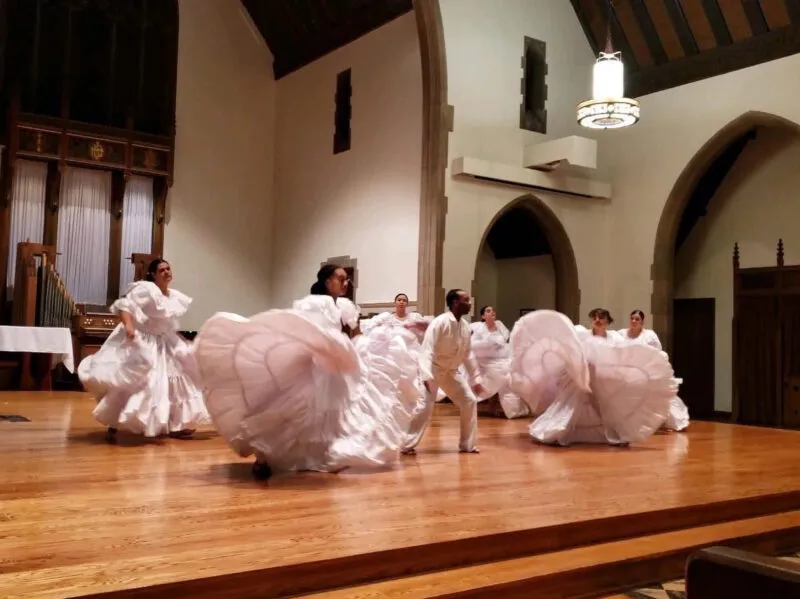
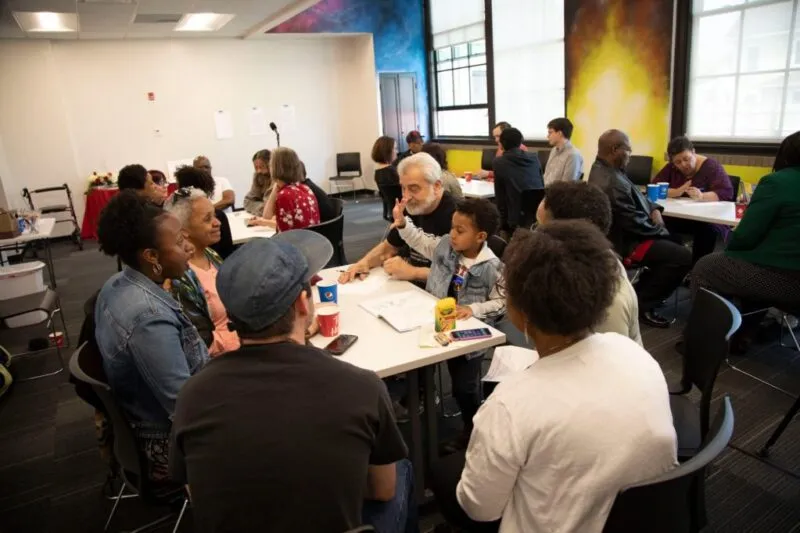
There are also organizations like the Borinquen Dance Theater in Rochester and Teatro Yerbabruja in Bay Shore which showcase the Puerto Rican and the larger Latine community arts and culture. These arts entities and their communities are intrinsic to the very fabric of New York. I am thrilled that leaders of all these venerable institutions mentioned along with others are a part of the advisory committee for HueArts NYS.Interestingly, growing up in Brooklyn, I hardly ventured to parts of the state outside of the five boroughs. It’s quite a strange dynamic. Downstate, we are disconnected from the rest of the state in many ways, not just by physical distance. It takes about seven hours by car to get to areas like Buffalo from Brooklyn, while one can get to parts of Long Island and Westchester in just an hour. Mostly everywhere outside of the boroughs are advertised as “getaways” from city life–especially places like Niagara Falls, the Catskills, and other sightseeing and leisure locations. However, there is also a tremendous amount of history in these areas as highlighted above.Still, I visited those parts of the state maybe once or twice as a kid. If I did leave the city for other parts of New York, I mostly went to Long Island to visit family members. While there, I rarely visited any museums, theaters, or historic sites even though there are arts and cultural entities in both Suffolk and Nassau counties just a few miles from where my relatives reside. I had no notion that these spaces existed outside of the city; it was so ingrained in me that the New York City arts scene is all that mattered. I know that isn’t true, but it was a perspective reinforced through my primary and secondary schooling in the NYC Department of Education, as well as my time studying Fine Arts and Art History at Brooklyn College, and even from the media and artwork showcased throughout New York City’s train and bus system.I mostly learned about the arts spaces mentioned earlier in recent years as I traversed the state to visit Black, Indigenous, Latine, Asian, Middle Eastern, and all People of Color arts entities. The expansion of HueArts from New York City to New York State to develop racial equity in the arts has provided me with a clearer lens to see the landscape and experience of Black, Indigenous, and all People of Color. So although many of these areas are exquisite, the racial disparities across New York State feel much more profound given the abundant natural beauty and resources found throughout its landscape.It is my intention that HueArts NYS also helps bring greater awareness of these arts entities’ incredible work and encourages opportunities and partnerships to bring them together. Arts entities like Ma’s House, located on the ancestral lands of the Shinnecock People within what is now Long Island, have been intentional in bringing together Black, Indigenous, Latine, Asian and all People of Color to showcase their artistic practices while also preserving the legacy of their people. Not too far away, Southampton African American Museum, which was originally a Black-owned barbershop, has been transformed into a growing cultural institution located in a historically African American neighborhood that has witnessed ongoing gentrification. Other efforts across the state also bring different communities together in partnership, collaboration, and resource sharing. For example, Frontline Arts Buffalo is a thriving partnership of four organizations: African American Cultural Center, El Museo, Locust Street Art, and Ujima Company.1Expanding our focus from New York City’s five boroughs to New York State’s other urban centers, suburbia, and more rural communities, also allows us to continue to unearth how we define the arts. These arts entities exist as mediums for social justice, and engines of economic vitality for main streets and downtowns. Their existence and continued practice are forms of resistance.Connecting people back to the land and allowing them to spend time appreciating it is also crucial to our future. Can we envision and hold the study and appreciation of plants and cultivation of the land as an artistic practice?

Stephanie Johnson-Cunningham
HueArts NYS provides a great opportunity to think about how our arts entities address the whole health of their communities not just through programming but their unwavering support and care.
Many Native American and African American farmers’ techniques in tilling the land in preparation to grow crops are creative skills passed down from generations as well as the preservation of their agriculture taught to them by their elders and ancestors. Preserving foodways is another practice that needs to be seen as an art form. We know that arts and culture contribute to a community’s health and well-being but how can we truly change the trajectory of someone’s life through community-driven care and connection to the land?Herban Cura, an organization that explores the history and potential of plants and people, is doing just that – providing opportunities for People of Color to learn the diversity and intricacies of New York’s geography. They build community through programming that takes people from the five boroughs to parts of the state that many would never explore on their own. Similarly, Hood Hikers creates a safe space in nature for Black and Brown folks to enjoy the outdoors. They curate hikes and other outdoor activities and provide transportation to get folks “out the hood into the woods.” It is a time to reconnect with one’s ancestors, tune into ourselves on the trail and out in nature.HueArts NYS provides a great opportunity to think about how our arts entities address the whole health of their communities not just through programming but their unwavering support and care. We truly aim to address the barriers that separate us from connecting all of New York State’s art entities of color.For this to happen, we must continue to make a case for greater agency, power, ownership, and resources for Black, Indigenous, Latine, Asian, and all People of Color’s artistic practices in all forms across New York State.As we have with HueArts NYC, we will explore the recommendations and mine data compiled to further uplift and champion arts entities across New York State.
Stephanie Johnson-Cunningham - Museum Hue
The framework of HueArts was created in 2021 to study arts entities founded, led by, and centering Black, Latine, Indigenous, Asian, Pacific Islander, Middle Eastern, and all People of Color (POC) as a New York City project undertaken by Museum Hue in partnership with The Laundromat Project and Hester Street. In February 2022, Museum Hue released the first-of-its-kind HueArts NYC Digital Map with an accompanying Brown Paper containing research findings and recommendations.This initiative was positively received and the trajectory of the work quickly led to the realization that expanding HueArts throughout the entire state was necessary for a clear survey of the issues. Because of the colossal popularity of New York City as a global creative and cultural hub, arts and cultural entities in other parts of the state do not receive the attention, resources, or acknowledgment they deserve. Yet they are equally valuable to New York’s creative and cultural economy, and each serves a critical role in their specific community. While many commonalities between the two groups are likely, we realized that the situation of institutions throughout the state warranted a singular study to understand these entities’ unique challenges, advocate for their particular needs, and demonstrate their distinct value.
Because of the colossal popularity of New York City as a global creative and cultural hub, arts and cultural entities in other parts of the state do not receive the attention, resources, or acknowledgment they deserve. Yet they are equally valuable to New York’s creative and cultural economy, and each serves a critical role in their specific community.
Therefore, HueArts NYS was created to gather information – stories, experiences, and data – about arts, cultural and historical entities founded, led by, and serving Black, Indigenous Black, Latine, Indigenous, Asian, Pacific Islander, Middle Eastern, and all People of Color in New York State. The aim is to bring greater attention, resources, and acknowledgment to these organizations from funders, legislators, potential collaborators, educators/academia, developers, and arts audiences; and to address the voids that have been created by exclusion from resources.
Our methodology was a mixed-method approach. For quantitative data, we deployed a 37-question survey asking POC-led and founded entities for information on the kinds of programming they offer, the audiences and communities they serve, the neighborhoods in which they work, the languages in which they offer programming, their sources of revenue, and much more. To identify survey participants, we reached out to the entities that would be eligible to be featured on the HueArts NYS Map and Directory, working with staff at the New York State Council on the Arts (NYSCA) and with local arts councils, to ask for referrals to arts entities as well as assistance with publicizing the project. We also received referrals and recommendations from members of the HueArts NYS Advisory Committee comprised of arts leaders of color from across the state. Museum Hue publicized the survey via social media with guidance from public relations consultants Eleven Thirty Six Strategies. We received 53 completed surveys from arts entities, and used data from 45 eligible respondents.
Summary of Findings
Funding & Finance
- The entities surveyed operate on extremely limited budgets, and more than half have budgets of less than $50,000.
- Entities reported extensive anecdotal experiences with implicit bias in grantmaking, including:
- lack of Black, Indigenous, and other People of Color (BIPOC) representation on grantmaking panels
- lack of BIPOC input into grantmaking priorities
- lack of anti-bias training for grantmaking panelists
- burdensome application processes that disproportionately disadvantage small and understaffed organizations such as those surveyed
- misalignments between funders’ values and priorities and the value that these entities provide.
- A lack of available unrestricted funding created extreme challenges for operating and especially for hiring staff.
Staffing & Professional Development
- The value of these organizations’ work is frequently under-recognized and uncompensated. This often includes community service, community representation/visibility, cultural/historical preservation that is not duplicated elsewhere, and education/advocacy work around Diversity, Equity, Inclusion, and Access.
Physical Space & Built Environment
- Many of the entities studied did not have stable or sustainable access to administrative and programming space, with 33% operating out of donated spaces and only 12% owning their own space
Advocacy & Community Building
- Operating in isolation and “silos” is a tremendous challenge. Regions are separated by great distances with few options for transportation. Many areas have very few – or just one – Black, Indigenous, and all People of Color arts entities. There was a tremendous appetite for more interaction for the purposes of mutual support, shared resources, access to one other’s creative output, and advocacy.
Summary of Recommendations
Reading the full Recommendations section at the end of this paper is crucial to understanding the call to action being made by this project. That section contains the complete list of recommendations, accompanied by action steps. Below we highlight and summarize some key recommendations.
Funding & Finance
- Create a designated fund for arts and culture entities led by and centering Black, Indigenous, Latine, Asian, Pacific Islander, Middle Eastern, and all People of Color throughout New York State
- Ensure greater equity in the distribution of state funds by including more leaders and artists from these entities in shaping grant guidelines and evaluating applications
- Allow more arts and cultural entities led by Black, Indigenous, Latine, Asian, and all People of Color to access grant funds, especially for unrestricted support, by making conscious changes to governmental funding practices
Staffing & Professional Development
- Create career development opportunities for current and future Black, Indigenous, Latine, Asian, Pacific Islander, Middle Eastern, and all People of Color artists, arts administrators, and leaders
- Support continued data collection initiatives about the staffing needs of arts, cultural, and historical entities founded and led by Black, Indigenous, Latine, Asian, Pacific Islander, Middle Eastern, and all People of Color
Recognizing Value
- Require publicly-funded decision-making bodies to include Black, Indigenous, Latine, Asian, Pacific Islander, Middle Eastern, and all People of Color arts and culture leaders to share decision-making power
- Establish a statewide history and arts and culture passport program that educates the public on place-based history and promotes local knowledge
Physical Space/Built Environment
- Invest in long-term sustainability of art, culture, and historical entities that are rooted in “place” and local communities to continue supporting their communities
Advocacy and Community Building/Breaking Down Silos
- Foster relationships between Black, Indigenous, Latine, Asian, Pacific Islander, Middle Eastern, and all People of Color arts and culture entities across the state and with sovereign nations
Frontline Buffalo
HueArts NYS is a project of Museum Hue, the leading organization dedicated to advancing Black, Indigenous, and all People of Color in the cultural field; it is conducted in partnership with Hester Street, an urban planning, design and community development nonprofit.
In accordance with Museum Hue’s goal to uplift and center Black, Indigenous, and all People of Color arts entities throughout the conception and implementation of this project, we assembled a leadership team of BIPOC cultural producers to bring an authentic voice to the narrative around their work. The 14-member Advisory Committee of arts, culture, and historical leaders from throughout the state also played a key role in shaping this project.
The goals of the HueArts NYS initiative are to:
- Provide New York State and statewide municipal agencies, policymakers, private funders, philanthropists, peer organizations, arts and culture enthusiasts, and the general public with information about arts, cultural, and history entities founded and led by Black, Latine, Indigenous, Asian, Pacific Islander, Middle Eastern, and all People of Color, and outline specific calls to action (see “Recommendations”) that prompt actionable, sustainable change
- Identify and map POC-led and -founded performing and presenting arts entities working in communities throughout New York State
- Foster deeper and stronger relationships among BIPOC arts and cultural leaders
- Amplify the impact of POC arts entities, and increase support to sustain their critical contributions to city and rural life
- Advance racial and cultural equity, and an inclusive sense of belonging
- Expand and diversify both public and private investments in POC arts entities
Throughout this brown paper, we will name Black, Latine, Indigenous, Asian, Pacific Islander, Middle Eastern, and all People of Color whenever possible. We understand there is much diversity within these groups, and each group’s historical and current experience with racial and ethnic inequality is unique. We will also use the terms people of color (POC) and Black, Indigenous, and People of Color (BIPOC) as unifiers and to call attention to the collective solidarity efforts made to push against racial systemic injustices felt within each of our unique communities.
Both BIPOC and POC are terms used interchangeably throughout the report for brevity, but we note here that the HueArtsNYS project partners and Advisory Committee members are acutely aware that both of these terms are problematic and potentially damaging to our collective solidarity and antiracism efforts.
“Personally, I see the term as another form of erasure. Lumping us into a single category is dangerous to our efforts. My story is distinct, just like everyone else [represented in HueArts], and I have worked too hard for it to be erased. I am tethered to those before me and to those after me. I also realize how far we need to go. We are gaining ground and momentum, but I feel [the term] BIPOC can actually hinder that progress. America needs to address all of the groupings bestowed upon us – at least in the broad strokes regionally, and we can demand specific identity signifiers locally. They need to know that the United States belongs to all of us and we should not have to demand equal access. Until then, everyone, including me, needs to keep identifying all of us by meaningful identity markers that at least point to some of the structural inequities that we keep observing in the world.”
A Glossary explaining the terms frequently used in this paper is available in the Appendices.
We hope that this process opens up further dialogue about the terms that we use, and the new terms we can create, as Dr. Stahlman recommends — to identify ourselves, to build community and power that “comes from participation and inclusion”, and to advocate for antiracist practices and policies in society.
This project has two deliverables:
- An interactive Digital Map and Directory with basic data on nearly 130 POC-led arts entities across New York State (to be maintained by Museum Hue), gathered through community outreach, online searches, crowdsourcing efforts, existing directories, interviews, and community conversations
- This Brown Paper1 with findings recommendations incorporating survey data, first-person narratives and testimonials
Our work focused on NYS regions including the Capital, Central New York, Finger Lakes, Long Island, Mid-Hudson, Mohawk Valley, North Country, Southern Tier, and Western New York regions. Much of our research was framed with the questions:
- What are the distinguishing values and contributions of New York State arts and culture entities founded and led by Black, Latine, Indigenous, Asian, Pacific Islander, Middle Eastern, and all People of Color?
- What are the specific challenges? What are the triumphs and joys of the work that you and your arts entity does?
- What are the most significant resources that your arts entity needs to thrive in the long term?
In the following paper, we synthesize findings from the quantitative and qualitative information, incorporating some of the direct accounts and commentary from the arts leaders themselves, and present recommendations for future action.
As described above, several strategies were employed to collect extensive qualitative and quantitative data about these arts entities. We believe that the results are accurate, telling, and extremely informative. However, we recognize that the sample sizes are not large enough to draw sweeping conclusions about all Black, Latine, Indigenous, Asian, Pacific Islander, Middle Eastern, and all People of Color arts entities, which are racially, ethnically, and culturally diverse. Additionally, New York State itself is far from a monolith, comprising many cultures, diverse economies, urban centers, and less densely populated areas. We are only able to begin to understand the real estate and land, changing demographics, economics, and gentrification of the state.
This study does provide crucial information that has not been collected before. However, to do the kind of outreach needed to gather more conclusive data from a larger pool will require more time, people power, and significant financial resources. The current project is a necessary and compelling starting point that should serve as a call to action for funders, legislators, and community leaders.
One notable finding that either directly or indirectly relates to every single theme – particularly funding/finance and staffing/capacity – is the budget size of the entities surveyed. Two-thirds (66%) have budgets of under $100,000. As a point of comparison, only 17% of New York State entities reporting to Data Arts (the primary entity collecting data on arts and cultural non-profit organizations nationwide) report budgets under $100,000.
Furthermore, more than half (52%) of the entities surveyed for HueArts NYS operate on budgets of under $50,000 (this is half the size of the smallest budget category surveyed for Data Arts). Because budget size affects every aspect of an organization’s capacity – how many staff members can be hired, what programs can be produced, what kind of space can be accessed, how much risk and/or financial adversity can be absorbed, how much administrative time is available – it is well worth keeping this extraordinary disparity in mind during review of every finding and recommendation.
Accessing funding is a primary concern for arts and cultural entities founded and led by Black, Indigenous, Latine, Asian, Middle Eastern, and all People of Color. Although this is probably the case for most arts entities serving any population, for the organizations we surveyed, an unequal playing field greatly compounds the challenges of an already-competitive process. The arts, cultural, and historical leaders we spoke to described facing both explicit and implicit barriers to funding.
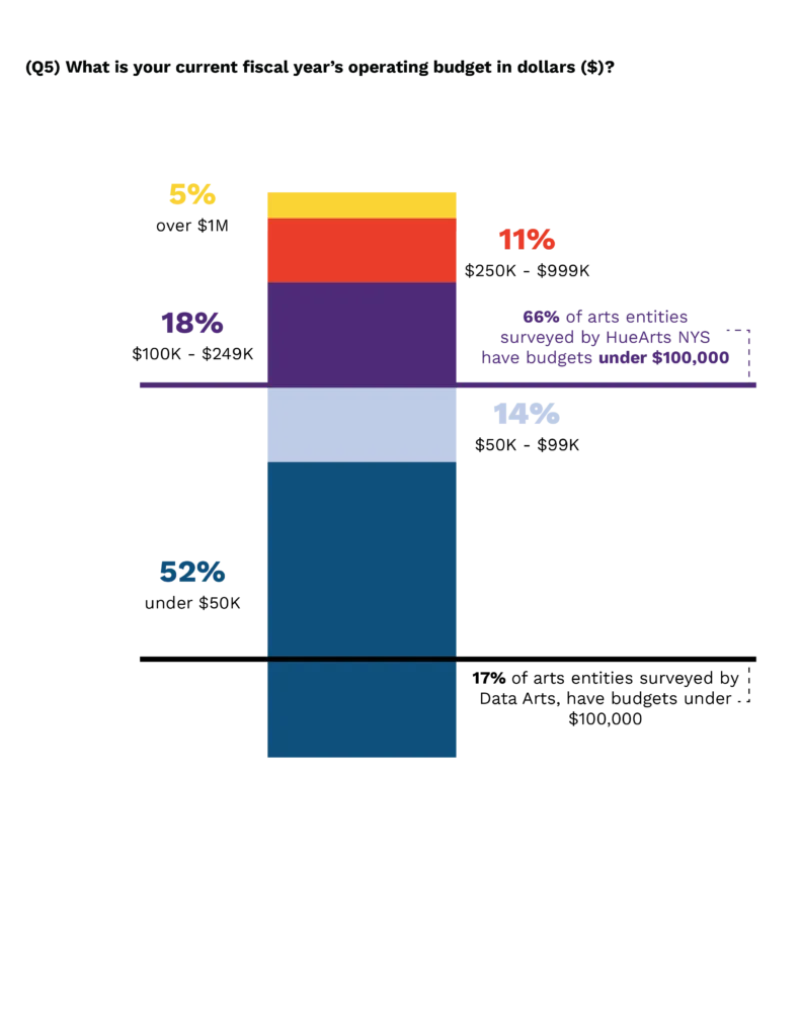
Fig 1: Stacked bar chart displaying the percentages of surveyed arts entities whose current fiscal year operating budgets in dollars ($) fall within specific bands.
Juror Bias and Lack of Representation on Grantmaking Panels
During our conversations, we heard that Black, Indigenous, and all People of Color are underrepresented on grant decision-making bodies. Reviewers often do not have the cultural context, background, or nuanced understanding of each applicants’ work to effectively judge the programs or work done by these arts entities, particularly when organizations are showcasing work, culture, and history that is not well known to the mainstream.
Additionally, when arts leaders of color are in fact called on to serve on grantmaking panels, these efforts fall short if work is not done to create a true culture of belonging where people are genuinely connected and new perspectives are truly valued. As it currently stands, panelists of color frequently serve in isolation, and are often put in the position of doing the additional labor of calling out inherent bias, providing ad hoc education, and fighting for equity.
As Cjala Surratt, co-founder of Syracuse’s Black Artist Collective, stated: “What is the compensation for the non-program-related labor of educating the partner and making sure communities are not tokenized or harmed? What is the impact on the organization that is doing the heavy lift on educating the partner?”
“Because Black, Indigenous, Latine and all People of Color have not had equal access to funding, spaces and training, it’s important for policymakers to level the playing field … funders should include leaders in the arts and cultural field on their boards and listen to them. Citizens in their communities should demand inclusion of People of Color from the policy makers and the funders.”
Funder Priorities and Metrics of Worth/Success
We heard frequently that many common metrics of success and impact measurement are not aligned with the goals of arts entities founded and led by Black, Indigenous, Latine, Asian, Middle Eastern, and all People of Color. Funders were described as expecting grants to be written with certain buzzwords and academic writing styles, rejecting other forms of writing or those with different backgrounds in the arts. One participant shared that their organization’s background in establishing a theater was discounted as “experience” because the theater had been in Puerto Rico.
In addition, organizations with small budgets sizes may be excluded from particular opportunities because their capacity to steward large grants is questioned. But this can be a catch-22; capacity relies on staff size. A lack of adequate staffing is a symptom of inadequate funding, not a measure of competence. But it is endemic to use budget size as an indicator of success, a measure of capability, and therefore a qualification for significant funding. However, if your organization is the only entity in the world promoting or preserving an invaluable local history that is largely unknown or misunderstood (as in the case of the North Country Underground Railroad Historical Association or the Seneca Iroquois National Museum, among others), can that value be measured in budget size? Such undertold narratives are of deep, consequential meaning to both past and living individuals, and to a true representation of our history at large. Without the work of these organizations, those histories are in genuine danger of being permanently lost. We lack metrics that adequately account for that value.
“I view our museum as an excellent resource for the history of the Underground Railroad, as it was not information that was readily known in the community. It’s not just freedom seekers that came through that route. We’re also talking about the Chinese because of the Chinese Exclusion Act. The Vietnam draftees that use the same route. And today, we have immigrants going through. That’s not information many individuals are aware of in the US, and even in our community… Funders tend to not recognize our work because it was not well known.”
Overall, arts entities want rubric language for their communities that is rooted in the actual significance of their work. (See the “Recognizing Value” theme below, for more). It is also common for these organizations to provide services that benefit the community, such as youth development, elder engagement, or professional development, in addition to or as part of their arts programming. This ability for the arts to improve the quality of life, every day, is often invisible and not acknowledged as a measure of success or impact along with the usual metrics such as budget size.
On the flip side, because of the broad and diverse programming many of these arts entities provide, some have found success seeking money allocated for transportation or housing to create arts spaces. One of the Town Hall participants shared, “[Our] neighborhood wanted to expand the street – we diverted money to create arts spaces and became a neighborhood of the arts in Rochester. We went after transportation and housing money…How else can our communities be lifted up by the arts and get funding from organizations building community?”
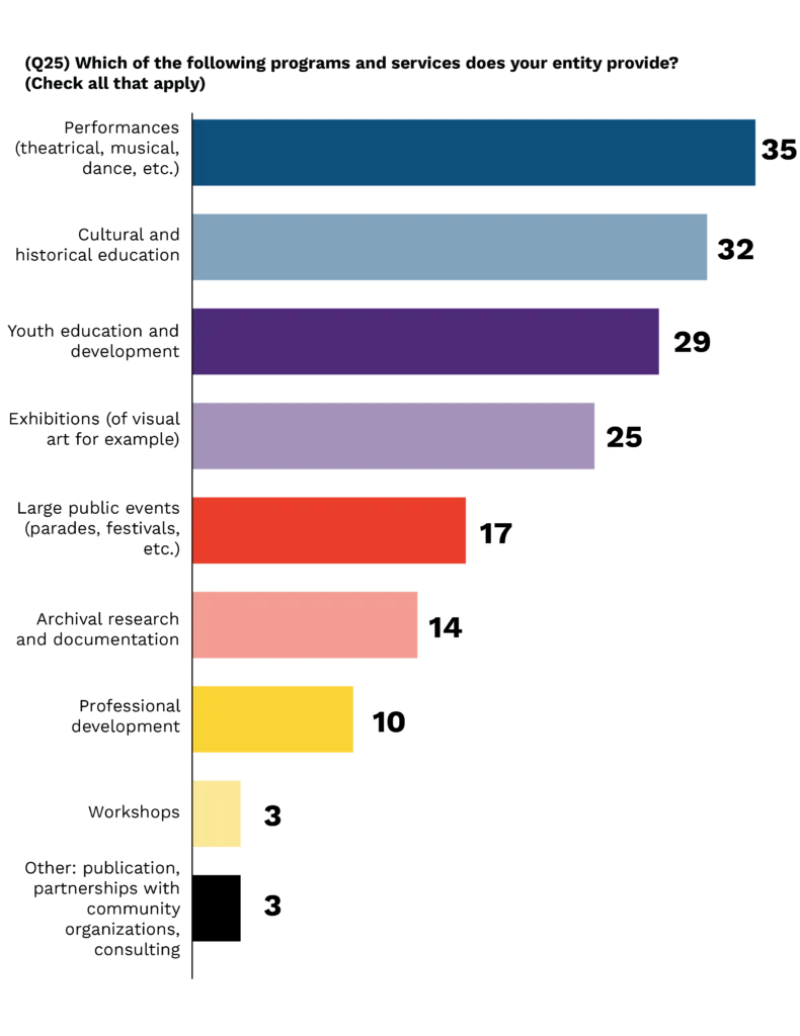
Fig 2: A horizontal bar chart that shows the types of programs and services that arts entities provide – respondents chose all answers that applied to them.
“When we talk about what wraparound support organizations are able to provide at the community level, there’s nowhere on the application forms to add that information. It’s not valued in that sort of way. “
“The other thing that’s undervalued, especially in our region with the work that we do as an organization, is that we’ve started workforce development for older people. We have our critical core group that we’re always working with – high school age – but now we started all these programs. How do we think about the value of arts institutions as providing stable income, jobs, and opportunities for people to live and thrive in their own communities rather than feel like they can’t survive in upstate NY as an artist? … Arts institutions can be a center of gravity and a grounding force to create a sense of sustainability and possibility in an upstate community that maybe didn’t exist before.”
Eligibility and Application Processes
Within the existing funding models for grants, competition is fierce and applications are difficult. Many leaders expressed reluctance to participate in grant application processes because of the time and effort; small organizations cannot afford the administrative time if it repeatedly does not pay off, and they already feel they can’t compete with larger, more monied arts entities.
Some arts entities are ineligible for significant pots of funding because they are not located in areas slated to receive development funding (in some contexts, these are referred to as “opportunity zones,” often sites of displacement and gentrification). In other instances, arts entities founded and led by Black, Indigenous, Latine, Asian, Middle Eastern, and all People of Color are located in geographies that aren’t very diverse, such as the Hamptons, which excludes them from certain funding initiatives.
In addition, funders may unexpectedly change their priorities or restrict the purpose for a grant, which can be disastrous for an understaffed small organization, particularly if they have already put significant time and effort into an opportunity.
Zainab Saleh of Squeaky Wheel/Frontline Arts Buffalo expressed frustration around spending a whole year advocating for federal ARP funds, only to find that the city re-allocated those funds, intended as capacity-building grants for small arts organizations – for larger organizations capable of absorbing a $250K project-restricted grant. “I’m feeling very disheartened this month..How do you convince [funders] to give us authority in an environment and be able to speak for ourselves?”
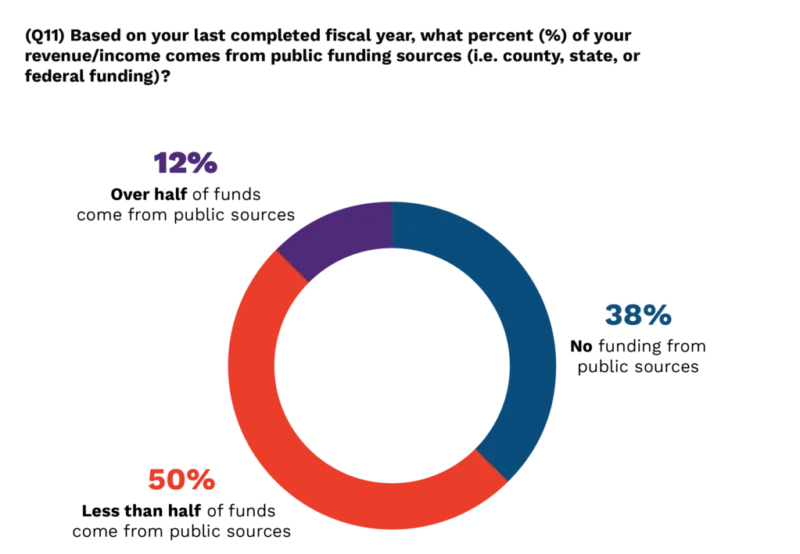
Fig 3: Donut chart showing the percentage of surveyed arts entities who have no funding from public sources, less than half of their funds coming from public sources, and over half of their funds coming from public sources.
Many spoke of having difficulty accessing public funding; 37.5% of those surveyed had never received any federal, state, or municipal grants, in part because of onerous application processes that are particularly taxing on entities with limited staff (sometimes prohibitively so). As one arts leader noted, many people within these communities are taxpayers, so the awarding of public funds should be accessible to the arts entities that represent them.
New York State Council on the Arts (NYSCA) funding was described as notoriously difficult (their online system and lengthy application process in particular). One entity which was receiving professional grant-writing support recalled that even their grant writer struggled with Grants Gateway, an online portal used to submit NYSCA applications. Upcoming changes to the portal process are also frustrating for arts entities, who will now need to spend time and resources learning a different process.
“I worked for an arts council that awarded grants through NYSCA and many artists’ responses to funding barriers was the time it took to fill out the forms, coupled with the information requested and how it was not worth it for the grant amount they were applying for and the extensive reporting required afterwards.”
The usual process of applying for grant funding – particularly from public funding sources – was described as onerous, misaligned with the organizations’ actual work, and restrictive in its requirements. Consequently, for a notable number of the leaders we spoke to, it isn’t even part of their organization’s income equation.
Since grant funding is a huge source of support within the entire non-profit sector, and almost all non-profit organizations rely on it to some degree, this situation is a heavy blow to thriveability.
Tourism Funds
Tourism funding, which is also generated from taxpayer dollars, was specifically called out by several leaders. These funds have a designation for the arts sector to invest in marketing, infrastructure, and other projects to rejuvenate leisure, business, and travel in the area. They are public funds that benefit from the work of arts organizations through program visitation that creates income for local restaurants, hotels, and transportation.
However, tourism guidelines can disadvantage arts and culture entities founded, led by, and centering Black, Latine, Indigenous, Asian, Pacific Islander, Middle Eastern, and all People of Color, who frequently do not qualify even to apply for those funds. As noted, many operate on extremely small organizational budgets, and this budget range is frequently not eligible for tourism money.
Additionally, the nature of these arts entities’ work is often to simultaneously serve as community advocates and to address community needs. Funding requirements tied to generating tourism dollars are not only labor intensive (particularly challenging with a small staff), but are misaligned with these community-oriented goals and practices. If large funding pools for the arts are bound to tourism dollars, it effectively excludes the vast majority of POC arts and culture entities from even applying.
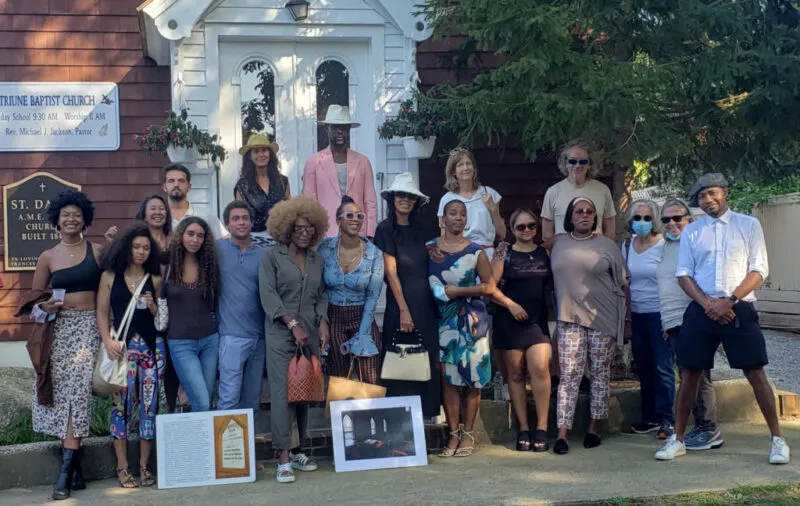
Eastville Historical Society
“Something must be done about that tourism (model) because we, the smaller organizations, can’t compete with the models that they have put forward … Before I Love NY, there was another campaign that we always refer to as a marketing scheme. It was those blue signs that certain museums got that can direct you off the Parkway or on major roads … We didn’t get access to those signs. But it goes back to the fact of staffing again, because the [requirement] to get into that program was you had to be open five days.”
Local/City Arts Councils
In addition to state funding, local arts councils are powerful institutions in the arts and culture industry in New York State. The leaders we spoke to came from an array of vastly different municipalities, and their experience of local arts councils was widely divergent. In some cases the power held by members of these arts councils was described as benefiting the few, or being used to provide programming for primarily white audiences.
“In the case of Teatro Yerbabruja, our organization was created to do theater. Today it is multidisciplinary, including visual arts, festivals, stalls. This was not the vision at first, but the reality is that the Latine artistic community has come to us with a need. One of the big challenges in Long Island is that there are too many Art Councils [that] only focus on their [own] programs and not on services to BIPOC artists. We [essentially] function as an arts council offering support services to Latine artists and artistic opportunities, although it is not part of our mission. Right now we have to rethink who we are and how to sustain the organization with so many artistic needs and few financial resources.”
Some arts councils prioritize the goal of increasing tourism, which as described above can disadvantage or exclude small arts entities, and can be seen as a mission conflict for community-serving arts organizations. Similar to comments we heard about grantmakers in general, some councils were described as having few or no BIPOC grant reviewers, and grant processes that require excessive paperwork..
However, in other instances, some leaders we spoke with had very favorable experiences with their city arts councils. Municipal councils that have stronger ties to local arts entities build a deeper understanding of an organization’s programming, which can, in turn, lessen the burden of grant application processes.
When the local arts council folded in one community, BIPOC arts leaders responded by rebuilding it with a focus on BIPOC arts entities. Arts entities founded, led by, and centering Black, Latine, Indigenous, Asian, Pacific Islander, Middle Eastern, and all People of Color may also end up serving their constituents as an unofficial arts council in order to meet their communities’ needs.
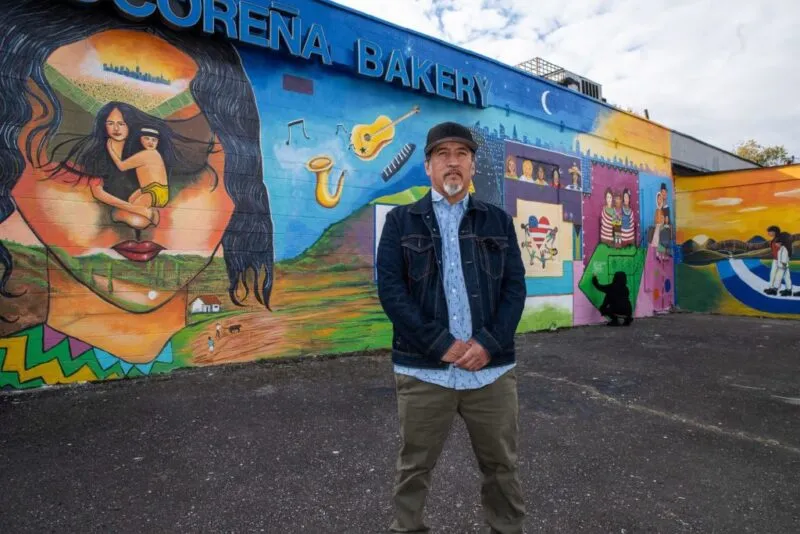
Teatro Yerbabruja
Seeking Unrestricted Funds
Unrestricted grant funding that can be used for operations is of critical importance to POC arts leaders. As it is now, most grant support is restricted and can only be used to support particular events or programs. In order for arts entities to thrive and continue to provide programming, they need to be able to hire and support staff. Without it, they cannot always keep up with the program demands that restricted grants require.
“Funders seem to assume [all] nonprofits just have endowments or major donors to cover the ‘work’ and operational costs, and that all we need is programming funding.”
Some entities were able to receive money through the CARES Act and other COVID programs, which for many were more straightforward than most existing grant application processes, and more frequently provided unrestricted funds. However, this much-needed funding arose from extraordinary circumstances, and is not sustainable. These one or two- time opportunities have now evaporated.
When they do receive grant funding, due to the long lead times imposed by application processes and the practice of government grants being issued as reimbursals (for which arts entities need to front the funds), arts entities often provide programming before they receive awards and then scramble to catch up – a particular hardship for organizations with small staffs and/or small budgets, usually (93.3%) operating with zero “rainy day” or reserve funds. Arts leaders spoke of the need to build up funding sources beyond public grants in order to grow sustainable funding. As one participant put it, “[restricted government] grants aren’t the answer to long-term sustainability!”
POC-led organizations can’t rely on funders who have traditionally excluded them, so several leaders recommended diversifying funding streams and seeking individual support. However, many of these arts leaders pointed out that the communities they come from may not have the resources to support them financially. Leaders in those communities largely lack opportunities to build assets…and flexibility. Consequently, they do not have access to a major “de facto” source that, in wealthier communities, serves to build organizational viability and artist livelihood.
If there is to be more equity in producing artwork and sustaining culture, it is imperative that the right plans and tools for financial management are put in place to facilitate long term staff capacity building efforts at arts entities founded and led by Black, Indigenous, Latine, Asian, Middle Eastern, and all People of Color.

Fig 4: Donut chart showing the percentage of surveyed arts entities that do or do not have a “rainy day fund.”
Ma’s House, located on the Shinnecock Indian Nation adjacent to extreme wealth (including a “Billionaire’s Lane” once occupied by the Ko in Southampton) faces a different type of uphill struggle with raising funds from individuals:
“I’ve been invited to some of the Hamptons galas at different institutions. And you can just see firsthand how celebrity and wealth is used to a certain degree that you’re almost questioning like is this what nonprofits are supposed to do? … [For] smaller institutions where you’re just barely trying to pay your staff or even have staff, it’s just a huge disparity and very discouraging.”
Several leaders noted that there has been a shift in recent years in the attitudes of foundations and other funding institutions, and increased interest in supporting Diversity, Equity, Inclusion, and Access (DEIA) work.
While this is encouraging, there are varying levels of understanding about how to award this money effectively, and varying degrees of interest in ensuring that projects are led by and representative of the communities they engage. From a grant-seeking perspective, many POC arts leaders are struggling to find and connect with these funders.
Staff Infrastructure
Many Black, Indigenous, Latine, Asian, and all People of Color arts leaders are juggling multiple roles from developing and implementing programming, to seeking funding, to managing staff and volunteers and planning for organizational sustainability. And to do so on a shoestring budget. Few of the surveyed entities have full-time staff other than their founder and leader, and nearly half have no full time staff at all or operate solely with volunteers. Burnout was a frequent topic of conversation – it is difficult to find balance when these one-person shops, mostly with budgets of less than $50,000, have to compete with fully-staffed entities for grant funding.

Fig 5: Donut chart showing the percentage of surveyed arts entities which have no active full-time staff, between 1 and 5 full-time staff members, or more than 5 active full-time staff members.

Fig 6: Two donut charts showing the percentage of arts entities surveyed that are able to pay staff a living wage and provide healthcare benefits.

Across the board, most, if not all of the arts leaders we talked to needed more staff. Many of these entities rely almost entirely on volunteer labor and are struggling to keep their missions alive and grow their programming with inadequate staff support. What little staff these arts entities do have – typically only the leader (an Executive Director or CEO, often the founder) with the occasional contractor or part time staff – spend much of their time on administrative tasks and fundraising to keep the organization afloat. Only about one third (35%) of those who do have full time staff are able to pay a living wage, and even fewer (24%) are able to provide health care benefits. This is primarily due to a lack of funding for general operating support.
“Borinquen Dance Theater (BDT) is planning to expand classes as a viable cultural Latine organization of 41 years in Rochester. We need our autonomy to sustain BDT for the next 41 plus years. We want to grow the reach of our performances beyond Hispanic Heritage month celebrations and will access existing resources to ensure this growth.
BDT has been fortunate to be able to sustain its operation with community support from various local funding sources, individual donors, and volunteers. BDT’s 41 years of existence requires discipline, commitment, resilience, funding, and belief of acknowledging Latine arts and culture as a viable resource for urban youth. BDT needs a personnel infrastructure that reflects actual cost for a transition to sustain the next 40 plus years.”
Building capacity in a way that’s supportive and fair for staff is a primary concern for the arts leaders who spoke with us. For many, the inability to provide staff with a living wage or healthcare coverage is a major barrier to actually hiring and retaining the necessary staff to maintain programs, conduct outreach, grow operations, or successfully compete for the funding they urgently need and richly deserve.
Career Development and Professional Development
Many Black, Indigenous, Latine, Asian, and all People of Color arts leaders are greatly concerned with cultivating the next generation of arts leaders, particularly as current leaders prepare for a leadership transition or plans to grow their staff. They would like to have the capacity to make arts more accessible to their communities, particularly in schools.
Arts leaders recommend starting as early as elementary school and continuing this outreach and education with students through college in teaching young people about the arts, and presenting it as a viable career path – which, as noted above, would also necessitate resources that ensure the arts are indeed a viable and sustainable career path for members of these communities.
Alongside cultivating future arts and culture leaders is the funding of professional development, including how to start and manage a business, financial literacy in the arts industry, bridging the tech divide, increasing accessibility, networking, conducting outreach and communications, and grant writing. Since many of the arts entities were founded out of necessity by artists, their leaders often never received formal training. Upon identifying the need in their communities, they dove directly into demanding, multifaceted jobs that also left little time or financial resources to seek out and attend such training. One arts leader called for holistic training on nonprofit management and governance specifically for communities of color.
It was noted that training and skills-building to demystify city infrastructure and mechanisms such as permits and codes, is essential as well. These processes can be extremely time-consuming and opaque, but if artists and cultural leaders have limited knowledge of how to navigate them, they may be excluded from opportunities to host festivals, parades, exhibitions, and other programs in public spaces and venues.
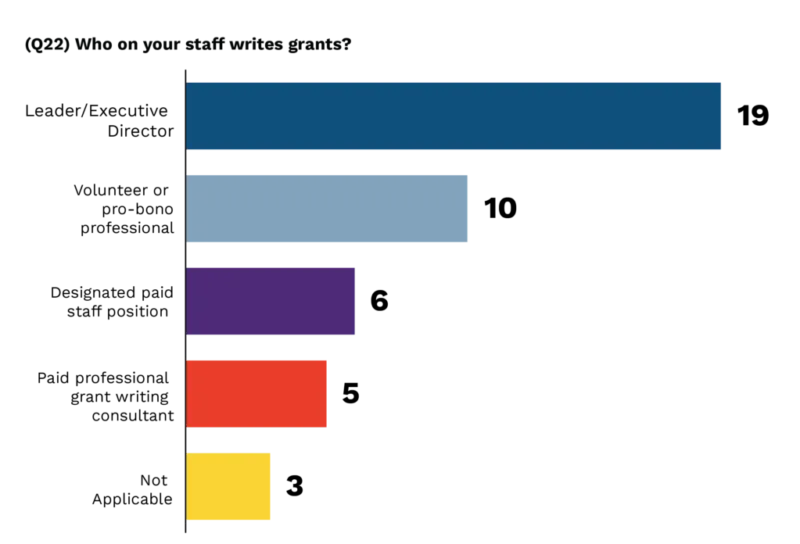
Fig 8: Horizontal bar chart showing the counts of who grant writing responsibility on staff for the surveyed arts entities.

Fig 9: Seven donut charts displaying the percentages of surveyed arts entities identifying their top 3 professional development needs.
Recognizing Value
Surveyed arts leaders stated a keen interest in shifting the narrative around arts and culture within their communities, within funding circles, and within the minds of artists. Overall, they strive to create a society that values the arts, supports artists’ work, and creates sustainable careers within the arts. For many, this is intrinsically connected to bringing people together, and to valuing the cultures and voices of Black, Indigenous, and all People of Color.
“When folks are considering a neighborhood, community, or city, they look at schools, places to visit, and things to do. Art is so undervalued in those conversations and I think of how it would really shift the consciousness around the critical need for art institutions … to build culture and to create space for communities to convene around issues of social justice and what is going on in their community as far as the broader development work …
People use the term “food desert” [an area with limited access to affordable nutritious food], but there are [also] arts and cultural deserts, and those are just as damaging to a community and the psyche of a neighborhood.”
In addition to better understanding the value of the arts at large, it is essential for funders, legislators, colleagues, and the general public to understand the value of the particular arts and cultural work produced by arts entities founded, led by, and centering Black, Latine, Indigenous, Asian, Pacific Islander, Middle Eastern, and all People of Color; and to have a greater understanding of the true degree of value they add to communities.
“Our Cultural Center is a resource for Indigenous arts, knowledge, culture bearers, and Indigenous community members. Additionally, the outside world comes to us for speakers, artists, performers, and knowledge holders. This allows our communities to control the type of knowledge out in the world about our people, communities, history, and arts. We have more agency. Funders don’t necessarily recognize that type of service or see it as a service.”
From preserving and revitalizing cultures and conducting archival research to providing professional development opportunities and educational programming, many arts entities founded and led by Black, Indigenous, Latine, Asian, Pacific Islander, Middle Eastern, and all People of Color see art as a way to meet community needs. Across engagements, many of the arts entities we spoke to described themselves as being one of very few arts spaces in their area centering BIPOC culture and experiences – if not the only one.
A core tenet for many arts entities founded and led by Black, Indigenous, Latine, Asian, Pacific Islander, Middle Eastern, and all People of Color is creating spaces that create, support, and sustain spaces for greater representation of artists who reflect these communities – spaces that do not otherwise exist. Through residency programs and by serving as fiscal sponsors, these arts entities have created ways for artists of color to create work, and be paid, when they are so often excluded by other institutions.
The spaces they create are unfortunately rare, and a goal for many organizations is to create many more such spaces. The goal is to create an environment that allows for joy and “art for art’s sake” without the necessity of being tied to commerce or other external goals. They grow their audience reach of artists, raise awareness and increase the visibility of their communities. In some of the most segregated communities in the state, arts entities founded and led by Black, Indigenous, Latine, Asian, Pacific Islander, Middle Eastern, and all People of Color foster spaces for gathering, connecting, healing, and flourishing.
“When you think of the Hamptons or even New York State, you don’t think about native people still living there. And just that simple idea of representing oneself and trying to persuade people that you are there, has been a challenge.
Many of our (resident) artists have never applied for a residency before or even had an interest; and so I think that having more POC-led organizations would allow more people to prosper and thrive and feel like they belong.”
These entities provide representation of and for their communities where, often, there was none. In taking this approach, they have implicitly added value as they uplift communities which have been marginalized, and amplify dynamic and irreplaceable creative voices within the cultural makeup of the state.
Because of this profoundly held goal around community, accessibility is a key concern for these arts entities. Many take extra care to ensure their programming is available to everyone, including keeping programs affordable (or, in most cases, offering the majority of programs completely free). This may involve seeking additional funding to keep programs free, and at least one organization is working to develop a business model that provides free access specifically to Black, Indigenous, Latine, Asian, Pacific Islander, Middle Eastern, and all People of Color.
Arts and culture entities founded and led by Black, Indigenous, Latine, Asian, Pacific Islander, Middle Eastern, and all People of Color across New York State need the time and resources to demonstrate the importance of their work in ways that are understandable to those in power. It takes time and resources to demonstrate this value in a clearly accessible way; and again, traditional metrics often do not take into account this vital work. These arts leaders “demand proper evaluation of the work and labor of POC artists,” and proper payment and resources that reflect that labor and value.

Fig 10: Two donut charts displaying the percentages of arts entities with budgets under $50K offering free and monthly programming.

Problematic assumptions which reflect a lack of value recognition can also emerge from arts leaders at predominantly white institutions (PWI) who engage with arts entities founded and led by Black, Indigenous, Latine, Asian, and all People of Color. At times, colleagues from PWIs can reflect a similar lack of awareness to that of many funders and legislators. They may reach out to meet Diversity, Equity, Inclusion, and Access goals without much understanding or knowledge of the communities, the value of these organizations’ work, or even a complete understanding of a community’s culturally specific arts practice.
“The assumption is that Black people have to be introduced to the arts, despite how our artists and arts have been here and creating work all along.”
Additionally, to meet DEIA goals for grant applications, impact reports, or internal purposes, PWI entities may reach out to arts entities founded, led by, and centering Black, Latine, Indigenous, Asian, Pacific Islander, Middle Eastern, and all People of Color to provide expertise or programming in their spaces. This request benefits the host organization by enabling them to say they’ve worked with communities of color. However, these requests rarely include funding, so that BIPOC labor, expertise, and resources are tapped for free. At least two arts entities also described data being extracted from them without compensation.
Broadly, entities need to be paid for their services – their data, connections, and their experiences. Having time, expertise, or data used without permission or compensation utilizes resources these entities often cannot afford, and also enacts a familiar racist paradigm of presumed ownership and appropriation.
“We are asking people that have mined our art and culture for centuries to appreciate and respect what they have taken for granted. Policymakers, foundations and funders cannot change the way they see us without advocacy and engagement. BIPOC organizations have to become our own advocates and present in a way that these “mainstream” entities understand. It’s not enough that they understand us…we have to prepare to interface with them, they have the money.
Right now we are in a moment where organizations and funders acknowledge that without BIPOC representation on their stages and in their final reports, they are not relevant. In many instances local arts councils are trying to do the programming we have been doing without the necessary resources. Politicians will come to our programs for the ‘photo op’ to ensure they have pictures to secure votes from our community and [yet] we have no plan to hold them accountable for an equitable share of the funding. A strategy that moves us forward collectively to engage with funders and audiences would be wonderful.”
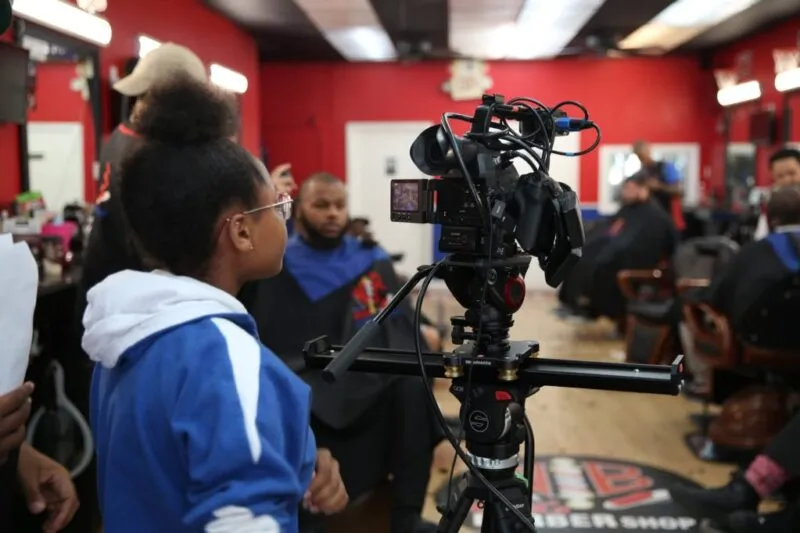
Youth FX, Credit: Michael Mejia
Surveyed arts leaders stated a keen interest in shifting the narrative around arts and culture within their communities, within funding circles, and within the minds of artists. Overall, they strive to create a society that values the arts, supports artists’ work, and creates sustainable careers within the arts. For many, this is intrinsically connected to bringing people together, and to valuing the cultures and voices of Black, Indigenous, and all People of Color.
“When folks are considering a neighborhood, community, or city, they look at schools, places to visit, and things to do. Art is so undervalued in those conversations and I think of how it would really shift the consciousness around the critical need for art institutions … to build culture and to create space for communities to convene around issues of social justice and what is going on in their community as far as the broader development work …
People use the term “food desert” [an area with limited access to affordable nutritious food], but there are [also] arts and cultural deserts, and those are just as damaging to a community and the psyche of a neighborhood.”
In addition to better understanding the value of the arts at large, it is essential for funders, legislators, colleagues, and the general public to understand the value of the particular arts and cultural work produced by arts entities founded, led by, and centering Black, Latine, Indigenous, Asian, Pacific Islander, Middle Eastern, and all People of Color; and to have a greater understanding of the true degree of value they add to communities.
“Our Cultural Center is a resource for Indigenous arts, knowledge, culture bearers, and Indigenous community members. Additionally, the outside world comes to us for speakers, artists, performers, and knowledge holders. This allows our communities to control the type of knowledge out in the world about our people, communities, history, and arts. We have more agency. Funders don’t necessarily recognize that type of service or see it as a service.”
From preserving and revitalizing cultures and conducting archival research to providing professional development opportunities and educational programming, many arts entities founded and led by Black, Indigenous, Latine, Asian, Pacific Islander, Middle Eastern, and all People of Color see art as a way to meet community needs. Across engagements, many of the arts entities we spoke to described themselves as being one of very few arts spaces in their area centering BIPOC culture and experiences – if not the only one.
A core tenet for many arts entities founded and led by Black, Indigenous, Latine, Asian, Pacific Islander, Middle Eastern, and all People of Color is creating spaces that create, support, and sustain spaces for greater representation of artists who reflect these communities – spaces that do not otherwise exist. Through residency programs and by serving as fiscal sponsors, these arts entities have created ways for artists of color to create work, and be paid, when they are so often excluded by other institutions.
The spaces they create are unfortunately rare, and a goal for many organizations is to create many more such spaces. The goal is to create an environment that allows for joy and “art for art’s sake” without the necessity of being tied to commerce or other external goals. They grow their audience reach of artists, raise awareness and increase the visibility of their communities. In some of the most segregated communities in the state, arts entities founded and led by Black, Indigenous, Latine, Asian, Pacific Islander, Middle Eastern, and all People of Color foster spaces for gathering, connecting, healing, and flourishing.
“When you think of the Hamptons or even New York State, you don’t think about native people still living there. And just that simple idea of representing oneself and trying to persuade people that you are there, has been a challenge.
Many of our (resident) artists have never applied for a residency before or even had an interest; and so I think that having more POC-led organizations would allow more people to prosper and thrive and feel like they belong.”
These entities provide representation of and for their communities where, often, there was none. In taking this approach, they have implicitly added value as they uplift communities which have been marginalized, and amplify dynamic and irreplaceable creative voices within the cultural makeup of the state.
Because of this profoundly held goal around community, accessibility is a key concern for these arts entities. Many take extra care to ensure their programming is available to everyone, including keeping programs affordable (or, in most cases, offering the majority of programs completely free). This may involve seeking additional funding to keep programs free, and at least one organization is working to develop a business model that provides free access specifically to Black, Indigenous, Latine, Asian, Pacific Islander, Middle Eastern, and all People of Color.
Arts and culture entities founded and led by Black, Indigenous, Latine, Asian, Pacific Islander, Middle Eastern, and all People of Color across New York State need the time and resources to demonstrate the importance of their work in ways that are understandable to those in power. It takes time and resources to demonstrate this value in a clearly accessible way; and again, traditional metrics often do not take into account this vital work. These arts leaders “demand proper evaluation of the work and labor of POC artists,” and proper payment and resources that reflect that labor and value.
Fig 10: Two donut charts displaying the percentages of arts entities with budgets under $50K offering free and monthly programming.
Problematic assumptions which reflect a lack of value recognition can also emerge from arts leaders at predominantly white institutions (PWI) who engage with arts entities founded and led by Black, Indigenous, Latine, Asian, and all People of Color. At times, colleagues from PWIs can reflect a similar lack of awareness to that of many funders and legislators. They may reach out to meet Diversity, Equity, Inclusion, and Access goals without much understanding or knowledge of the communities, the value of these organizations’ work, or even a complete understanding of a community’s culturally specific arts practice.
“The assumption is that Black people have to be introduced to the arts, despite how our artists and arts have been here and creating work all along.”
Additionally, to meet DEIA goals for grant applications, impact reports, or internal purposes, PWI entities may reach out to arts entities founded, led by, and centering Black, Latine, Indigenous, Asian, Pacific Islander, Middle Eastern, and all People of Color to provide expertise or programming in their spaces. This request benefits the host organization by enabling them to say they’ve worked with communities of color. However, these requests rarely include funding, so that BIPOC labor, expertise, and resources are tapped for free. At least two arts entities also described data being extracted from them without compensation.
Broadly, entities need to be paid for their services – their data, connections, and their experiences. Having time, expertise, or data used without permission or compensation utilizes resources these entities often cannot afford, and also enacts a familiar racist paradigm of presumed ownership and appropriation.
“We are asking people that have mined our art and culture for centuries to appreciate and respect what they have taken for granted. Policymakers, foundations and funders cannot change the way they see us without advocacy and engagement. BIPOC organizations have to become our own advocates and present in a way that these “mainstream” entities understand. It’s not enough that they understand us…we have to prepare to interface with them, they have the money.
Right now we are in a moment where organizations and funders acknowledge that without BIPOC representation on their stages and in their final reports, they are not relevant. In many instances local arts councils are trying to do the programming we have been doing without the necessary resources. Politicians will come to our programs for the ‘photo op’ to ensure they have pictures to secure votes from our community and [yet] we have no plan to hold them accountable for an equitable share of the funding. A strategy that moves us forward collectively to engage with funders and audiences would be wonderful.”
Many Black, Indigenous, Latine, Asian, Pacific Islander, Middle Eastern, and all People of Color arts leaders we spoke with dream of having a dedicated space for their arts entities. Having space allows them to have greater agency over when and how they hold programming, and to establish a footprint within their communities, especially as many are being displaced by gentrification.
At the moment, finding a permanent space is difficult for many arts entities founded and led by Black, Indigenous, Latine, Asian, and all People of Color. Many rent spaces, but for a significant number of them, the financial burden to even rent a full-time space is beyond what their budgets can bear, especially as gentrification continues to raise prices in their neighborhoods. Many utilize donated spaces or collaborate with one another or with larger institutions to provide programming out of shared spaces.
This constant hunt for space brings instability and additional challenges and expenses. For example, an entity may be required to provide programming during off-hours if they utilize commercial spaces, or they’re required to acquire permits (which sometimes come with a fee) to use public spaces. In other instances, entities are limited by available spaces, and must scale back their programming to fit the venues they can find.
In the face of these challenges, many art entities are interested in pursuing capital campaigns to acquire permanent spaces or are interested in learning more about what it would take to develop a space.
But capital funding is difficult to come by, and metrics for such funding are even more likely to measure success and capability by budget size. This can be frustrating for organizations operating on a small budget which have nevertheless provided consistent programming for many years, or even decades.

Fig 11: A donut chart that displays the percentage of arts entities that operate out of different types of spaces.
Some entities successfully obtained spaces, either with financial support from crowdfunding campaigns or by lobbying for inter-municipal agreements. Though ownership is a seemingly easy solution to champion, it, too, has significant challenges. Maintaining a building is a daunting financial burden, and there is little funding available to support the upkeep of art spaces, often forcing arts leaders to turn to their families and communities for resources. This barrier can be a heavy burden in cases where the communities themselves have scarce financial resources, and face a history of systemic exclusion from property ownership with practices such as redlining (mortgage refusal based on a perception that a neighborhood is a high financial risk), predatory mortgage lending, and appraisal biases.
Gentrification, especially following COVID-19, has been a stymying force across Long Island and upstate New York, triggering land grabs in communities of color and limiting access to space. In many cases, properties are owned by people who live outside the community and are not supportive of the local economy. It is also challenging to navigate the predominantly white developer space, where they may not have any context for, interest in, or understanding of Black, Indigenous, Latine, Asian, Pacific Islander, Middle Eastern, and all Communities of Color.
The Pre-existing Barrier: Silos
Collaboration and community are clearly valued by many of these organizations and leaders. But accessing and offering this solidarity presents its own challenges, and operating in isolation – in “silos” – is a big factor across Long Island, the Greater Hudson Valley, and all regions in New York State.
Each region has their own independent arts scene, often separated by many miles, and there is not much communication among them. There are often few options for transportation between geographically distant communities. Add this to the fact that, as noted above, it’s not uncommon for an area to have very few – or just one – BIPOC arts entity, and a sense emerges of how isolating the situation is for many of the arts leaders.
For a number of arts entities, one challenge that relates to siloing (as well as to funding and other important issues) is insufficient access to the technology infrastructure.
Many communities, especially those located in rural areas, lack basic internet access. Because the vast majority of funder information and application processes are now exclusively online, this makes even submitting an application for funding inaccessible; and it creates multiple challenges with visibility and community building, especially among different counties and regions.
“With so much information on the web and with art and cultural centers providing their materials in digital format, those areas without internet access will be left out of the loop. And, it’s not just internet access in rural areas because of the location, it is also limitations due to financial reasons. The latter tends to impact people of color the most.”
In a state as large and varied as New York, lack of public transportation was frequently cited as a barrier to greater collaboration and interaction. Many of these arts and cultural entities are only accessible by car, and even if they are accessible by public transportation it can take considerable time to travel there from another area.
Fig 12: A donut chart that displays the percentage of arts entities reporting the different distances their audiences travel to attend/participate in their programs.

Fig 13 (Right): A series of five donut charts show the percentage of arts entities reporting different modes of transportation being used by their audiences
Policy Advocacy and Creating Change
Hand-in-hand with the interest of Black, Indigenous, Latine, Asian, Pacific Islander, Middle Eastern, and all People of Color arts leaders to build community and strengthen collaboration is the desire for arts leaders to play a larger role in advocacy and policy-making: to have power within the arts and cultural industry in New York State. This includes having a voice at the governmental and policy level as well as serving on grant making bodies, as discussed in the Funding section. And as noted in both the Funding and Recognizing Value sections, many of the arts leaders we spoke to are already engaging in advocacy, in part because it is necessary for the survival of their organizations or their ability to conduct their programs and work.
“ [When we witnessed] that there were predatory permitting practices happening specifically to Black and Brown organizations looking to use our city and county parks, we sued the city and the police department and ultimately changed that permitting practice. So [for] something that actually has a legacy impact, you’re gonna have to make sure that it’s codified.
… I’m proud of the work that we did for an entire year – and ultimately it means that those individuals who want to use the parks – our city parks that we paid for through our taxes – that now we can have dances, we can have theater events, we can have all these different kinds of celebratory events here, and if we choose to, we can opt out of having a police presence at those events.”
Despite the difficulty of advocating with limited access to allies and peers, and despite frequently operating as a sole staff person, handling multiple roles, and/or being volunteers, many take on advocacy work as a matter of course. This uncompensated labor is shouldered in addition to job descriptions that are already packed, often out of a sense of necessity and a deep commitment to community.
“Participating in legislative changes for artists statewide meant attending town halls and hosting meetings to gather people to rally them to participate. A lot of this work was done on my own, because it wasn’t something my employer would pay me [to do]. Even though this was essential to fulfilling my role, it didn’t fit the parameters for what they wanted to fund.”
“My recommendation would be [to have] a BIPOC Arts Council that has the funding sources just like the (NYSCA) decentralization grant that some of us may have received at one point, to be able to administer these funds … The only way I feel that we get it done is if we have our own council to deal with these issues and push us forward because there are such inequities … [that] have to be attacked on a regular basis. And so that means somebody needs to be in charge of making sure that our agenda is being pushed forward.”
The Importance of Coming Together
Fundamental to the ability to effectively advocate is the ability to increase communication both within and among different communities. The ability to advocate and to affect policy is closely related to the challenge of siloing – to ensure real traction for creating change, it is necessary to have the chance to explore commonalities and to act collectively in larger numbers.
“If you come inside the museum, the upper level exhibition is all about the history of barbershops and beauty parlors. Right away you see a beautiful mural in there – this mural was designed by David Martine from the local Shinnecock Indian Nation. We do a lot of collaboration there …
I’m thankful for Jeremy—we collaborate together and support each other, and that helps in the fight.”
“I think that in order to thrive as POC organizations, we really need to see each other as collaborative beacons rather than redundancies or competition.”
During our focus groups and town hall convenings, arts leaders stated that they didn’t realize many others were in the same position as them, encountering many of the same challenges. Prior to the HueArts engagements, most arts leaders felt like they did not have the opportunity to come together as a larger group, share resources, lift each other up, or learn about each other’s programming.
Bringing arts leaders together and asking them to share their struggles and successes made it clear that they were not alone in this work. They expressed deep interest in continuing to meet, and in harnessing these shared experiences to present a vision and strategy for their shared success. Fledgling entities in particular felt that they could benefit from more opportunities to meet with experienced leaders.
“I think one of the most incredible things about this evening, as a person that has been doing this work for nearly 35 or 40 years, is [that] the folks that were speaking were saying the things that need to be said, and normally there aren’t enough people in the room that know it, and can say it well … to sit here and be incredibly content with the fact that the folks that were talking had every angle covered. So thanks to everyone. Because, being a person of color in America is…tiring!”
In an industry where allocation of resources often requires that these arts entities compete with one another, those we spoke with called for greater collaboration, cooperation, and solidarity to overcome their many shared challenges. Perhaps HueArts NYS will become the avenue through which these important conversations can continue, as a means by which POC arts entities can share resources, information, and support one another, and build collective power.
To return to a question posed at the outset of this paper: How can policymakers, funders, and others help arts entities founded and led by Black, Indigenous, Latine, Asian, Pacific Islander, Middle Eastern, and all People of Color to thrive in the long-term? Based on the findings above, and arranged by the same thematic categories, we have developed a series of recommendations (the items in bold). One or more specific action steps follow each recommendation.
Funding & Finance
1 – Create a designated fund for arts and cultural entities led by and centering Black, Indigenous, Latine, Asian, Pacific Islander, Middle Eastern, and all People of Color throughout NY State
- Museum Hue leads the initiative in establishing such a fund (modeled after the Creatives Rebuild New York, but with no expiration date)
- NYSCA partners with private foundations to increase the funding pool and distribution
- Prioritize grants for multi-year general operating funds (without an expectation to meet the state’s tourism goals)
- Evaluate performance based on metrics of success co-developed with BIPOC arts and cultural leaders in New York State that value the contributions of POC arts and cultural entities more holistically within their communities
- Require that metrics consider the specific challenges of needing to provide wraparound community services in addition to or as part of arts programming (eg. workforce development, childcare, advocacy, etc.) to give people agency over their culture
2 – Ensure greater equity in the distribution of state funds by including more BIPOC leaders/artists to be involved in everything from shaping guidelines and evaluating applications to awarding grants
- NYSCA to ensure that their grant panels include POC leaders/artists jurors and encourage public and private funders to include BIPOC artists and leaders in the development of guidelines and metrics for success
- Museum Hue to lead effort in getting more public and private funders to include BIPOC artists and leaders on panels, and in the development of guidelines and metrics for success
- Require NYSCA jurors to complete racial bias + culture/historic training
- Hold NYSCA accountable to equity goals, practices, and policies with regard to employment within the agency
3 – Increase unrestricted multi-year NYSCA funding for POC-led arts entities to build their organizational capacity and stability over time
- Streamline application process by creating a “Common Application” for all NY local, county, regional, and state grants related to arts and culture
- Provide more technical assistance to applicants on the grant application process, including increased accessibility such as applying via video essay or video application and translators / assistants to the application process; and to encourage private funders to do the same
- Simplify the grant application and reporting process to enable POC arts and cultural entities with limited budgets who are volunteer-run or have limited staffing, and (often) have no dedicated grant writer to apply for grants
- Require that arts councils provide multiple ways for arts and cultural entities to apply for grants (i.e. online, in-person, and through partnership with libraries, community centers, and other venues that provide free internet access)
- Ensure that grant information sessions and workshops are held at accessible sites in communities to lower barriers to participation; encourage the same for private funders
- Increase funding for hiring grant writers or fundraising staff or securing technical assistance on writing proposals/preparing grant applications
4 – Establish a line-item for the arts and culture in every municipal and county budget
- Work with NYSCA regrant partners to promote municipal and county participatory budgeting processes, and to recognize the arts as an integral part of the state’s long-term investments
5 – Separate tourism + marketing dollars from cultural/arts fund dollars
- Remove reporting requirements around ticket sales, patron information, and other quantitative data that privileges certain forms of art over others
- Remove restrictions that bar small organizations from participating in tourism funds, for example, a number of days per week an organization must be open
- Create more local funding opportunities outside of tourism
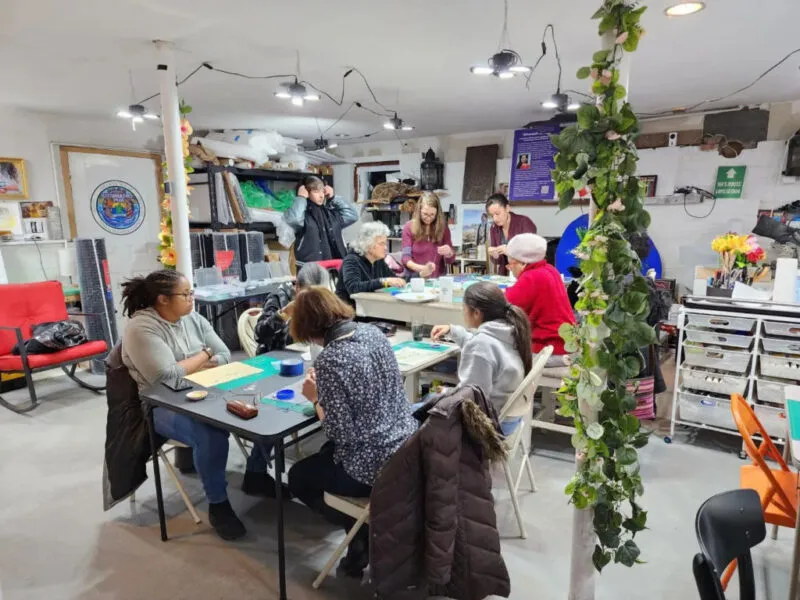
Ma’s House
Staffing & Professional Development
The call for increased unrestricted (general operating) funding above is crucially and intrinsically tied to the capacity for adequate, stable staffing and appropriate compensation. In addition, we make the following recommendations related to current and future staffing concerns:
1 – Create career development opportunities for current and future Black, Indigenous, Latine, Asian, Pacific Islander, Middle Eastern, and all People of Color artists, arts administrators, and leaders
- Fund paid internships and fellowships at POC arts and culture entities
- Provide funding for technical assistance, training, and professional development in fundraising/development, talent development, finance, tech, and other areas
- Fund collaborations with high schools and colleges to connect POC students to POC-led arts and culture entities, to the arts, and to future careers in the arts and cultural field
- Create a stipend for mentorships for emerging and mid-career POC arts professionals and organizers
- Create and sustain a peer network of POC arts and cultural leaders for ongoing information/resource-sharing, collaboration, mentorship, and community building
2 – Support deeper data collection initiatives to quantify, qualify, and track the staffing needs of POC-led arts and cultural entities to deliver programs and sustain their organizations
- Create funding opportunities and grants to work with POC arts and cultural entities to collect this data (through surveys and interviews) and deliver these programs
- Develop a database of individuals and entities that work in the arts and cultural sector to support entities in meeting their staffing needs
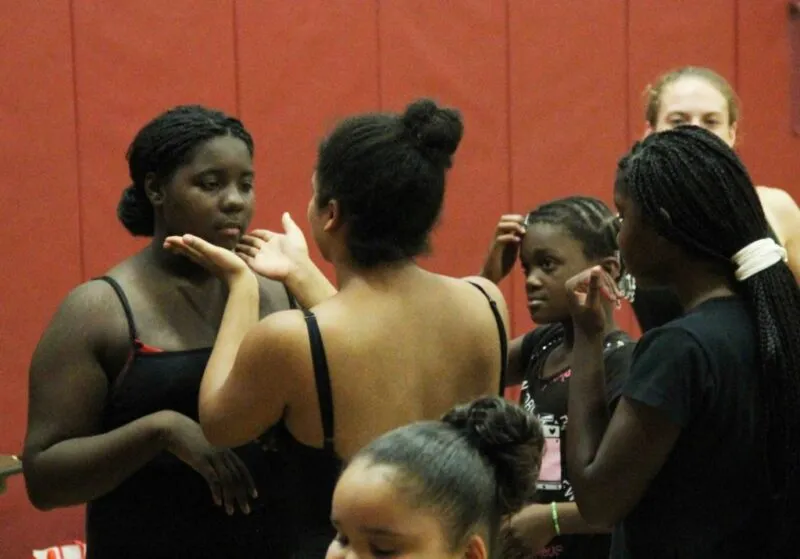
Kaleidoscope Dance Theater
Recognizing Value
1 – Require all publicly-funded decision-making bodies to include BIPOC arts and cultural leaders to share decision-making power
- Secure public and private funding for Museum Hue to serve as a “defacto” BIPOC arts council (with a similar structure to NYSCA’s decentralization grant-making sites) that administers funds and pushes forward an equity agenda
- Invite BIPOC arts and cultural leaders onto councils and boards to contribute ideas at the strategic development stage when making decisions regarding tourism, city development and planning and other long-term investment in the arts
- Require decision-makers to complete racial bias and cultural/historic training
2 – Support state-wide data collection efforts to track impact of tourism and other funding on POC-led arts and cultural entities
- Identify POC-led arts and cultural entities receiving state and local tourism dollars, and track data over time
- Analyze data and report findings on the impact of tourism on POC-led communities, POC artists’ involvement, tourism funding for POC-led arts and culture entities, etc.
- Increase public and private support for the field to engage in more rigorous data collection and reports on findings as integral to promoting equity, transparency, and accountability
3 – Establish a state-wide history and arts and culture passport program that educates public on place-based history and promotes local knowledge
- Promote awareness and visibility campaigns to uplift work of local organizations (e.g. Black history tour, passport, etc.)
- Link those programs to school arts education curricula
- In consultation with the leaders of arts and culture entities which are part of sovereign nations, establish and implement specific processes to ensure those entities can participate in these cooperative education programs in ways that work for those Indigenous communities
4 – Track and hold PWI’s (Predominantly White Institutions) accountable to their Diversity, Equity, Inclusion, and Access (DEIA) commitments
- PWIs to compensate (at market rate equal to what they would pay other consultants for their professional expertise) POC-led arts and culture leaders for their expertise in programming and outreach, inclusion in their reporting and promotional materials (photos), or community partnerships
- POC arts and culture leaders to require compensation for their services when asked to participate in Diversity, Equity, Inclusion, and Access initiatives led by PWIs
- Develop metrics to track Diversity, Equity, Inclusion, and Access commitments from PWIs and create an open, public watchlist holding them accountable to their commitments and recording any predatory or tokenizing behaviors
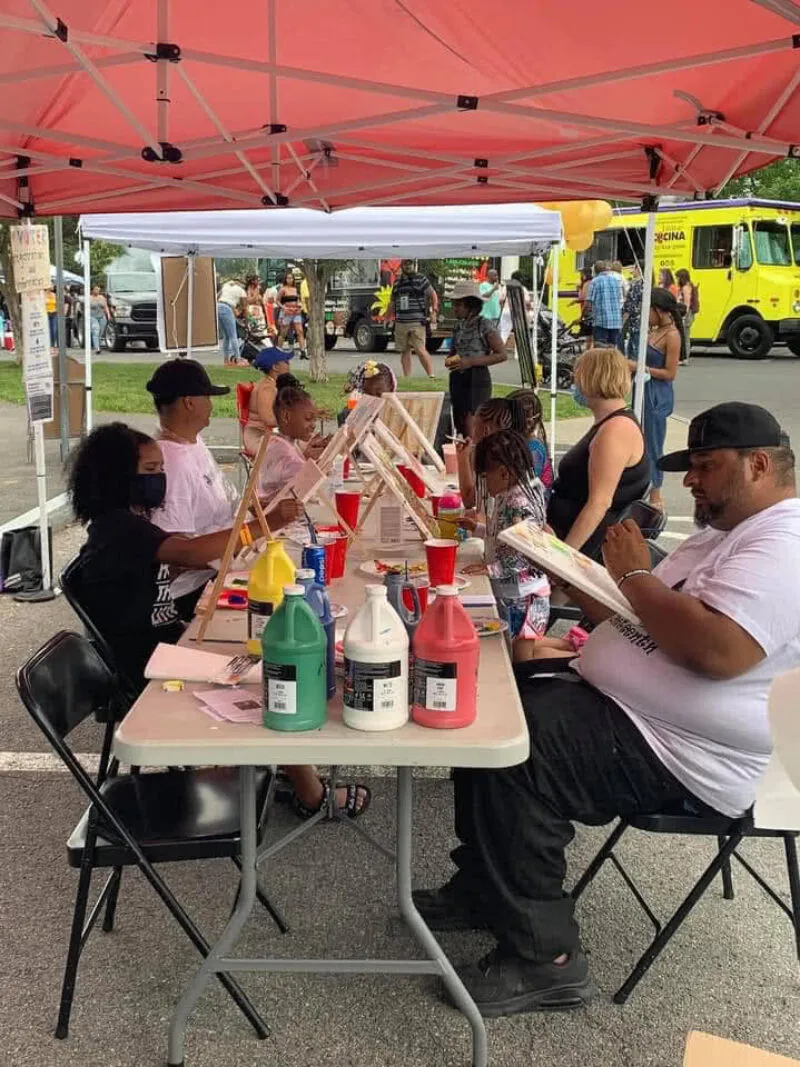
Black Artist Collective
“Looking at the mechanisms and barriers artists face in achieving success, I see a real need for building up professional development, grant writing support, and sitting on panels. We’re much more effective when we have an inside look at the grantmaking process, so I really encourage our community members to sit on these panels.”
Physical Space/Built Environment
1 – Create more opportunities that allow place-based POC-led arts entities to continue supporting their communities
- Promote greater agency over POC-centered space by facilitating more inter-municipal agreements that allow arts and cultural entities to secure long-term leases in city owned and managed property
- Gather case studies on cities /municipalities that have successfully:
- Partnered with developers of new mixed-use spaces to allocate a portion of the space to housing nonprofit arts and culture entities
- Written policy requiring disposition of public land to go to nonprofits or community land trusts (CLTs) before private developers
- Create a designated fund providing technical assistance and training on raising capital funds, building an endowment, identifying landlords and properties, acquiring and maintaining space, tapping opportunity zones, and preserving documented historical sites
- Create a network of design and engineering firms to partner with arts organizations to develop design drawings and a design package
- Create opportunities for intentional place-keeping where developers are in conversation with people who make culture
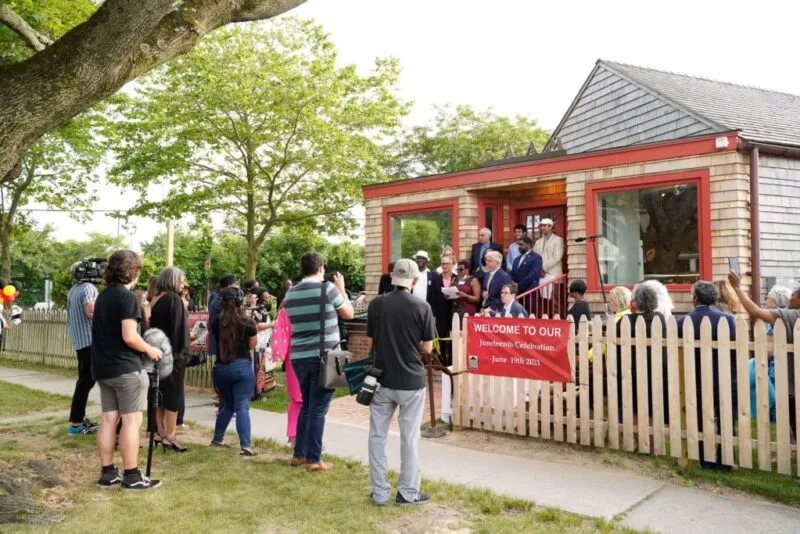
Southhampton African American Museum
Advocacy and Community Building/Breaking Down Silos
1 – Create opportunities that break down silos and foster relationships between BIPOC community leaders and within sovereign nations
- NYSCA and private funders to support an exchange program between different regions in New York State, and between entities identified in HueArts NYS and HueArts NYC projects
- Create more opportunities for POC arts leaders to convene and share successful models and strategies for strengthening their organizations (eg. scaling up, building capacity, navigating state and local funding, etc.)
- Support efforts to increase free Internet access and cellular service in POC-centered communities, particularly in rural and low-income areas (bridging the digital divide)
- Encourage PWI cultural institutions across the state to connect with, learn from, and partner with BIPOC arts and cultural entities
2 – Research and report on the specific needs of each region of New York State
- Continue the data collection efforts initiated through this Hue Arts NYS project to look more closely and individually at the state’s distinct regions (each has unique funding challenges, in addition to cultural and geographical nuances)
3 – Increase transportation infrastructure across New York State
- Advocate for New York State to promote public and private transportation initiatives that allow more POC communities (audiences) to reach and access POC-centered arts program offerings throughout the state
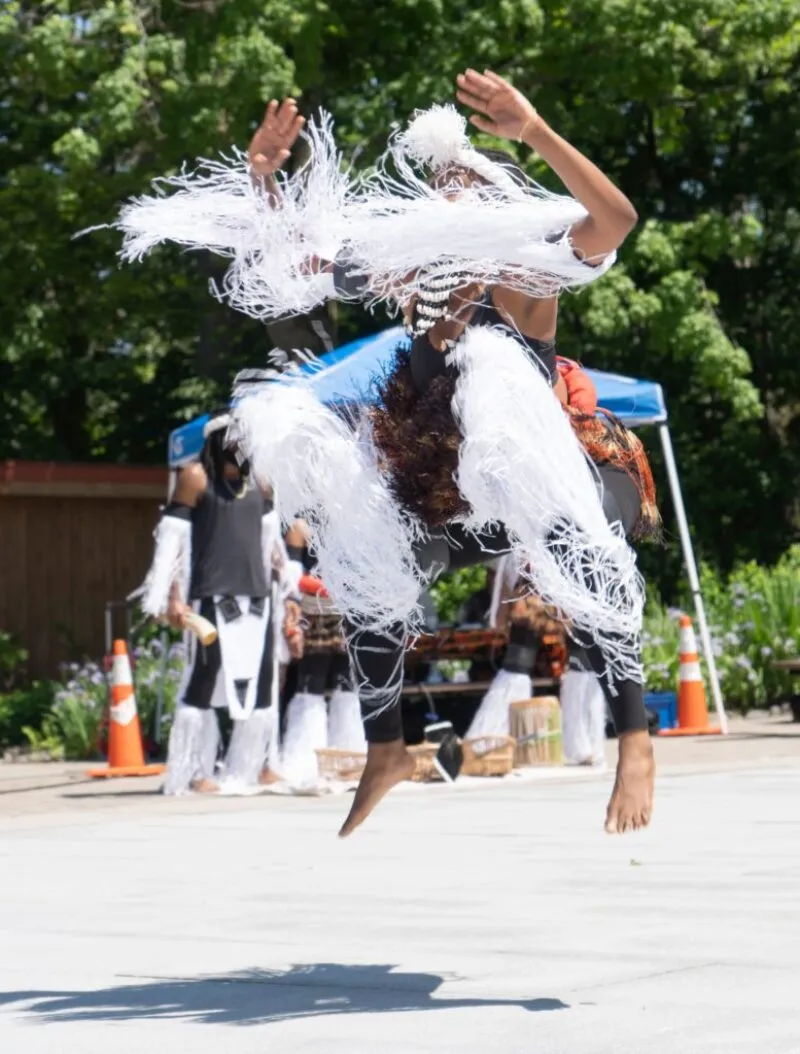
Transart
“It really warms my heart that we’re all here together discussing this, and I feel way less alone. Because one of the things that really bothers me is that it seems like in the non-profit sector we’re forced to compete for funding.”
It is impossible to fully convey the determination, joy, and hope present in the convenings and conversations reflected in this Brown Paper. So many connections were made within the advisory committee; many commonalities and complexities were discovered. These community arts leaders continually expressed mutual appreciation, admiration, and support for each other. Most of them had never met before, and were asked to describe and analyze sensitive information and experiences. They did this with honesty, mutual respect, and brilliance that frequently had the Zoom meeting chat box inundated with virtual cheers, solidarity, and the profound relief of recognition.
If funders, legislators, and audiences heed these words and experiences, New York State’s arts and culture scene will take an enormous step forward in racial equity.
There is no doubt that the HueArts team and those arts leaders who participated in this study will remain committed to their work and continue to advocate for their communities. Museum Hue, Hester Street, and the arts leaders involved in this project hope to continue to work with outside agencies to bring about change. But it is also up to those with access to resources and power to advance the equitable distribution of resources. The challenge posed by this report is to take the time to absorb the significance of the data and experiences reflected here, leverage this labor, and act on the directives outlined so that we move toward a more equitable arts landscape.
The process of creating the HueArts NYS Map and Directory and this Brown Paper, has led to exciting new connections, and the development of important relationships between the project’s many participants. That outcome is deeply valuable. This project was also undertaken with the intention to share the amazing work they create with a wider audience and the general public.
We are in a historical moment of increased attention to issues of racial equity, and many Black, Indigenous, Latine, Asian, Pacific Islander, Middle Eastern, and all People of Color are engaging in this moment with a mixture of wariness, resolution, and hope. We hope the findings and recommendations made in this Brown Paper will spur action, and motivate decision-makers to establish new policies and practices that move us towards greater racial equity and representation in this field.
The HueArts NYS project is a call to action. By examining difficult facts, dismantling harmful habits and unconscious assumptions, and doing the necessary long-term, generational legacy work for genuine belonging and true progress, we can build a framework for a more equal society. This Brown Paper provides specific, reachable steps to get us there.
If you are inspired to join this work, support this work, fund this work, and find ways to work with the arts entities listed in the Map and Directory, please visit the HueArts NYS website to learn how. We welcome the opportunity to engage in this vital work—together.
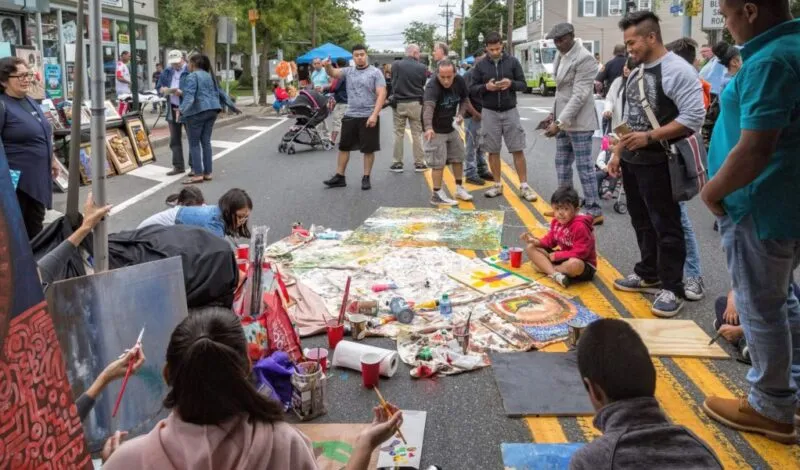
Teatro Yerbabruja
HueArts NYS has adopted certain terminology within the body of this paper, and explanations for some of the terms and phrases are below. Language within quoted material may be different. HueArts NYS recognizes the importance of representing the testimonials in the vernacular submitted by the individuals quoted, with only minor edits made to clarify a point when necessary. Here are some of the terms that appear throughout the paper:
African American
Americans of African, and especially Black African, descent. We have generally used the more inclusive adjective “Black,” except when people or organizations self-identify as African American.
Arts, cultural, and historical entities founded and led by Black, Latine, Indigenous, Asian, Pacific Islander, Middle Eastern, and all People of Color
These are the entities listed in the Map and Directory and reflected in the Brown Paper. We listed out, as best we could, the entire description because it is the most accurate and inclusive description. “Culture” and “history” were added to the original description of “arts entities,” on feedback from Advisory Committee members who noted that it more accurately described their organizations.
BIPOC
This is an acronym for Black, Indigenous, and People of Color.
Black (capitalized)
Black is a term that refers to the man-made construct of race for an individual. Unlike African American, Black can be used regardless of nationality. We have utilized the term Black except in cases where individuals have self-identified, in which case we use the preferred self-identifier.
DEIA
This is an acronym for “Diversity, Equity, Inclusion, and Access.” Many people believe that in order to work toward deeper change, a true sense of “Belonging” should be encompassed in this concept. Within the body of the paper, we generally spell out Diversity, Equity, Inclusion, and Access, and acknowledge the importance of Belonging. However, in many contexts, “DEIA” is also still a commonly-used shortcut.
Indigenous (capitalized)
With Indigenous rights movements, this term became a way for Indigenous peoples to articulate common challenges of colonialism, settler governments, displacement, and exploitation. As opposed to the small-i adjective “indigenous,” (which can refer to many people and things), the capitalized term identifies a group of political and historical communities.
Latine (capitalized)
This is a gender-neutral alternative to using the letters “a” and “o” as feminine and masculine identifiers (Latina/Latino). Latinx is also used by some as a gender-neutral alternative, but the letter “e” is sometimes preferred as more in keeping with Spanish pronunciation.
New York State
This paper studies individuals and entities working throughout New York State with the exception of the city of New York, which was covered in an earlier study. Usually, the term New York State is used to describe the area covered in this report. “Upstate” is a term sometimes used to describe counties north of suburban Westchester, Rockland and Dutchess counties, but outside of quoted material we have decided not to reflect the “upstate/downstate” divide. This choice is a way to avoid reinforcing some of the mistaken assumptions and attitudes that often accompany these terms (such as the notion that “downstate” is urban and “upstate” is rural; or that “downstate” is the state’s focal point and “upstate” is everything else). This choice is also a subtle way to advocate that the state work together as a whole, in hopes that this report will open up people from all parts of the state to explore whatever other parts are unknown to them.
POC
An acronym for People of Color, this term is sometimes used as a unifier, or simply for brevity. Within the body of the paper we have generally chosen to spell out the names of the communities encompassed.
HueArts NYS project partners Museum Hue and Hester Street are extremely grateful to our boards for their ongoing work and support, and to our dedicated staff teams for making this project a reality.
Funding Partners
HueArts NYS is made possible by the New York State Council on the Arts with the support of the Office of the Governor and the New York State Legislature. We are grateful for major support and partnership from the New York State Council on the Arts that allowed for the expansion for HueArts across all of New York state. Additional support was provided by:
The Andrew W. Mellon Foundation
The Ford Foundation
The National Endowment for the Arts
Blanchette Hooker Rockefeller Fund
In addition, this project is made possible by the wisdom, insights, and commitment of many contributors:
Advisory Committee
Bhawin Suchak, Youth FX
Sean McLeod, Kaleidoscope Dance Theatre Inc.
Nydia Padilla Rodriguez, Borinquen Dance Theatre, Inc.
Jeremy Dennis, Ma’s House & BIPOC Art Studio Inc.
Sylvia Diaz, Art JuXtapose Gallery
Jackie Madison, North Country Underground Railroad Historical Association
Zainab Saleh, Frontline Arts Buffalo
Dr. Joe Stahlman, Seneca-Iroquois National Museum
Cjala Surratt, Black Artist Collective
Margarita Espada, Teatro Yerbabruja
Greer Smith, TRANSART
Dr. Georgette Grier-Key, Eastville Community Historical Society
Ana Chireno, Mirram Group
Brenda Simmons, Southampton African American Museum
Interview Participants
21st Century Arts Inc. – Rachel DeGuzman
AJ Williams Meyers Library African Roots Center – Nina Tucker
Art Services Inc. – Joseph Mastroianni
Arts Mid-Hudson – Lillia Perez
Avenue Blackbox Theatre – Reenah Golden
Black Artist Collective – Cjala Surrat
Borinquen Dance Theatre – Nydia Padilla Rodriguez
Buffalo String Works – Yuki Numata Resnick
CNY Arts Inc. – Brian H. Lee and Liz Lane
Eastville Historical Society – Dr. Georgette Grier-Key
Forge Project – Candice Hopkins
Frontline Buffalo – Zainab Saleh
Huntington Arts Council – Emily Dowd
The John & Alice Coltrane Home – Ravi Coltrane
Kaleidoscope Dance Theatre – Sean McLeod
Michigan Street African American Heritage Corridor
North Country Children’s Museum – Sharon Williams
North Country Underground Railroad Association – Jacqueline Madison
NYS Office of Parks, Recreation and Historic Preservation – Cordell Reaves
Seneca Museum – Dr. Joe Stahlman and Hayden Hanes
Southampton African American Museum – Brenda Simmons
New York State Council of the Arts– Leanne Tintori and Fabiana Chiu-Rinaldi
Teatra Yerabrauja – Margarita Espada
Vernon Byron, Artist
Community Conversations Participants
Talima Aaron, John W. Jones Museum
Nando Alvarez-Perez, The Buffalo Institute for Contemporary Art
Anu Annam, Sea of Visibility
Storm Ascher, Superposition Gallery
Alexas Esposito, Center for Indigenous Knowledge and Healing
Tracy Todd Hunter, Of Colors Creative Collective
Adrian John, Sully Huff Heritage Center
Desiree Kee, El Museo
Antonia Perez, Herban Cura Co-founder and Program Director
Minera Perez, OLA of Eastern Long Island
Kitt Potter, Director of Arts & Cultural Affairs, Kingston, NY
Ineil Quaran, Dope Collective
Annette Ramos, Rochester Latino Theatre Company
Cordell Reaves, NYS Office of Parks, Recreation and Historic Preservation
James H. Rolling Jr., JHRolling Arts, Education, and Leadership Strategies
Gretchen Sorin, Director & Distinguished Professor, Cooperstown Graduate Program
Maria Ta, Ujima Theater Company
Alexa and Edreys Wajed, Eat Off Art
Thomas Warfield, National Technical Institute for the Deaf (RIT)
Qiana Williams, Markitah Williams, and Jaleel Campbell, Black Artist Collective
Survey Participants
Adelante Student Voices
Afghan American Artists and Writers Association
Alma de Mexico
ArtFarm Press
Articulation NY LLC
Black Artist Collective CNY
Black Theatre Troupe of Upstate NY, Inc.
Borinquen Dance Theatre, Inc.
The Buffalo Institute for Contemporary Art
Community Folk Art Center
Southampton African American Museum
Eastville Community Historical Society
Eat Off Art
El Museo Buffalo
Frontline Arts Buffalo
Get Woke! Catskills
Grupo Cultural Latinos En Rochester, Inc.
Harambee
International Women in Jazz
INSPIRED
Jaleel Campbell Studios
JHRolling Arts, Education, Leadership Strategies
John W. Jones Museum
Kaleidoscope Dance Theatre
Kundiman
La Joven Guardia del Teatro y la Danza Latina, Inc
Living Arts Collaborative, Inc.
Ma’s House & BIPOC Art Studio Inc.
Neto Hatinakwe Onkwehowe
North Country Underground Railroad Historical Association
Of Colors Creative Collective
OLA (Organización Latino Americana) of Eastern Long Island
Paul Robeson Performing Arts Company
Rattapallax, Inc.
The Rochester Latino Theatre Company
SEA of Visibility
Stanley “Sully” Huff Heritage Center
Sukanya Burman Dance Company
Superposition Gallery
Teatro Experimental Yerbabruja
TRANSART & Cultural Services Inc
Typography of Woman
Ujima Company, Inc.
Youth FX
Town Hall Participants
Prisca Adams
Saladin Allah
Charles Anderson
Anu Annam; SEA of Visibility
Marcela Artunduaga
Devin Bhola; Rubin Museum of Art
Tiffany Joy Butler
Jaleel Campbell; Black Artist Collective
Jessica Chen
Margaret Chen; Natl Museum of the American Indian NYC
Brittni Collins
Charlecia Joy Cole
Magaly Colimon-Christopher; Conch Shell Productions
Susan Fisher
Rina Flatau
Lauren Gibbs; LG Capital for Culture
Lucas Grant
Kimberly Griffiths
Khurshid Guru
Sueey Gutierrez
Lorna Harris
Dayatra Amber Hassan
Adrián Hernandez
Judith Houston
Deb Howes; Dorsky Museum
Jane Jackson
Ryan Jackson
Delores Jackson Radney
Annette Jiménez Gleason
Afua Kafi-Akua
Sean Kelley
Kilolo Kumanyika
Jacqueline Lennon
Jacqueline Madison
David Martine
Laudelina martinez
Linda Mboya
Sean McLeod
Anneliese Meck; Genesee Country Village & Museum
Rose Merola
Salvador Munoz
Nada Odeh
Marilyn Post
Aaron Rice
Oscar Robert
Greer Smith
Rhea Smith
Ellen Snyder-Grenier
Evan Starling-Davis; Artist
Paz Tanjuaquio
Julie Tay
Jihan Thomas
Wright Thompson
Tracy Todd Hunter; Of Colors Creative Collective
Miriam Trementozzi
Cayetano Valenzuela
Sharon Vatsky
Thomas Warfield
David Wayne
Qiana Williams; CNYCF
Jo-Ann Wilson
Danny Winks
List of Mapped and Listed Arts Entities in Online Map and Directory
4 Elements Studio
21st Century Arts Inc.
AACC Dance and Drum Performance Company
Acting with Aaron
Adelante Student Voices
African American Cultural Centre, Inc.
African American Cultural Center of the Capital Region
African American Museum of Nassau County
Akwesasne Library & Museum and Cultural Center
Allegany River Singers & Dancers
Alma de Mexico
Armor and Heritage Dance
Art & Soul: Hamptons “Advocates for Black and Brown Artists”
ArtFarm Press
Articulation NY LLC
Asian-American Cultural Circle of Unity (AACU)
Big Indian Native American Center
Bill Crouse and The Allegany River Singers & Dancers
Black Artist Collective
Black Artist Collective CNY
Black Cuse Pride
Black Theatre Troupe of Upstate NY Inc.
Borinquen Dance Theatre, Inc.
Bronze Collective Theatre Festival, The
Brothahood Productions
Buffalo Arts Studio
Buffalo Institute for Contemporary Art, The
Buffalo String Works
Charles B. Wang Center at Stony Brook University
China Arts Link
Chinese Center on Long Island Inc.
Circulo De La Hispanidad
Colored Colors
Colored Musicians Club & Museum, The
Community Folk Art Center
Cumbia Spirit School of Dance
Delante Student Voices
Devi Bollywood Performing Arts
Dojo Dance
Dr. Margaret Wade-Lewis Black History Research and Cultural Center
Eastville Community Historical Society
Eat Off Art
El Museo Buffalo
Friends of Ganondagan
Frontline Arts Buffalo
Fusion Arts Collective, The
Ganondagan’s Native American Winter Arts Festival
Garth Fagan Dance
Gateways Music Festival
Get Woke! Catskills
Ghanaian Drumming and Dance Ensemble, Gballoi
Grand Street Community Arts
Grupo Cultural Latinos En Rochester, Inc
Hamilton Hill Arts Center, The
Harambee
Harriet Tubman Freedom Music Festival
Hipocampo Children’s Books
Hispanic Heritage Council
Hudson Muslim Youth
Hudson Valley Ebony Strings
Hudson Valley Tango Festival
Illuminate Theatre
INSPIRED
Ithaca Asian American Association
Ithaca Pan Asian American Film Festival
Jaleel Campbell Studios
Japan Center at Stony Brook University
JHRolling Arts, Education, Leadership Strategies
John & Alice Coltrane Home, The
John W. Jones Museum
Joined Artists, Musicians, & Singers, Inc. (JAMS)
Juneteenth Festival 2022 – (a part of) African American Cultural Center of the Capital Region
Juneteenth Festival of Buffalo
Kaleidoscope Dance Theatre
K Art
Kuumba Consultants
La Joven Guardia del Teatro y la Danza Latina, Inc.
Latino Arts Council of Long Island
Library at the A.J. Williams-Myers African Roots Center, The
Long Island Black Artist Association
Los Artistas del Barrio Buffalo
Ma’s House & BIPOC Art Studio Inc.
Maplewood Performing Arts Centre
Marty Jimerson Jr. and the Indigenous Spirit Dancers
Marvin “Joe” Curry Veterans Powwow
Mary E. Bell House
Michigan Street African American Heritage Corridor
Middle Eastern Festival
Mirabo Press
Napoleon Revels-Bey
Nash House
Native American Museum of Art
Native Arts Collective
Native Roots Artist Guild
Neto Hatinakwe Onkwehowe
New Era Creative Space
Next Generation Men of Transition (NGMT18)
Niagara Falls Underground Railroad Heritage Center
North Country Underground Railroad Historical Association
North Star Players
Of Colors Creative Collective
OLA of Eastern Long Island
Operation Unite New York
Pappy Martin Legacy Jazz Collective
Paul Robeson Performing Arts Company
poughETRY Fest
Punto de Contaco / Point of Contact Inc.
Q Pop Productions
Queen City Jazz Festival
Queerteenth Film Festival
Raices Theatre Company
Rattapallax, Inc.
R.E.A.L. Skills Network
Rise Up Kingston
ROC Freedom Riders
Rochester Black Pride
Rochester Latino Theatre Company, The
SEA of Visibility
Seneca Art & Culture Center
Seneca Iroquois National Museum
Shinnecock Indian Nation / Cultural Resources Department
Soul Fire Farm
The SOUL of Pride at CNY Pride Festival & Parade
Southside Community Center
Southampton African American Museum
Stanley “Sully” Huff Heritage Center
Sukanya Burman Dance
Superposition Gallery
Teatro Experimental Yerbabruja
TRANSART & Cultural Services Inc
Typography of Woman
Ujima Company, Inc.
Wacheva Cultural Arts
Youth FX
HueArts NYS Project Team
Museum Hue is dedicated to amplifying Black, Indigenous, and other People of Color in the arts and cultural field by providing tools and resources as well as by building networks. In January 2020, Museum Hue launched The Hue Museums, a national map and directory of museums created by and centering Black, Indigenous, and People of Color across the United States. From 2022 forward, HueArts NYC has been a program of Museum Hue; and 2023 forward, HueArts NYS is a program of Museum Hue.
Stephanie Johnson-Cunningham
Mia Rubin
Addison Tobias
Sierra Van Ryck deGroot
Hester Street (HST) brings to the partnership a POC-led team with deep knowledge and expertise in GIS mapping, community engagement, and data visualization. HST led the planning of NYC’s first CreateNYC Cultural Plan and the city’s 2020 Census Complete Count Campaign. HST is a national urban planning, design, and development nonprofit that works to ensure communities, neighborhoods, and cities are shaped by the people who live in them, especially for those historically left out. They offer planning, design, and community development technical assistance to community-based organizations, government, and other agencies.
Kami Beckford
Lillian Cho
Yury Higuchi
Amron Lee
Sarah Pritchard
Ryan Westphal
Advisory Committee
Bhawin Suchak, Youth FX
Sean McLeod, Kaleidoscope Dance Theatre Inc.
Nydia Padilla Rodriguez, Borinquen Dance Theatre
Jeremy Dennis, Ma’s House & BIPOC Art Studio Inc.
Sylvia Diaz, Art JuXtapose Gallery
Jackie Madison, North Country Underground Railroad Historical Association
Zainab Saleh, Frontline Arts Buffalo
Dr. Joe Stahlman, Seneca Museum
Cjala Surratt, Black Artist Collective
Margarita Espada, Teatro Yerbabruja
Greer Smith, TRANSART
Dr. Georgette Grier-Key, Eastville Community Historical Society
Ana Chireno, Mirram Group
Brenda Simmons, Southampton African American Museum
Branding, Design and Web Development
HOUSEOFCAKES
Public Relations
Eleven Thirty Six Strategies
Writer
Kelly Kuwabara
Funders
New York State Council on the Arts
The Andrew W. Mellon Foundation
The Ford Foundation
The National Endowment for the Arts Blanchette Hooker Rockefeller Fund